
The UK Government has formally adopted a new long-term strategy intended to make England officially bovine TB-free by 2038. Although the policy applies only to England, several elements are likely to influence the direction of Welsh policy, particularly as the Welsh Government refreshes its own eradication programme.
England’s strategy replaces large-scale badger culling with a package centred on earlier detection, cattle vaccination, badger vaccination, wildlife surveillance, movement controls and closer cooperation between government, farmers and vets.
What England is proposing
The main measures include:
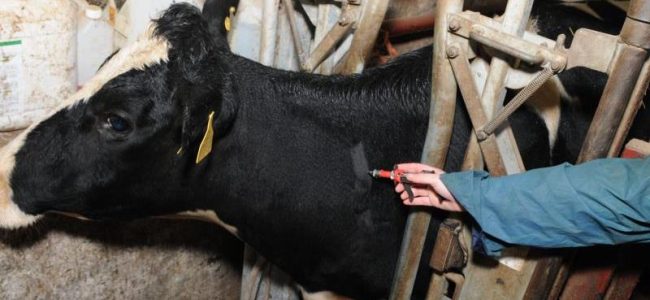
- An ambition to begin deploying a bovine TB vaccine for cattle, alongside the companion DIVA test, by 2030.
- Wider mandatory use of interferon-gamma blood testing to identify infected cattle earlier.
- Trials allowing farmers to purchase additional approved TB testing.
- Targeted badger vaccination delivered through a new field force.
- A government-funded scheme to collect and test dead badgers.
- Better disease data, local delivery groups and a new joint government-industry board.
- Further consideration of whether compensation should be linked to biosecurity, purchasing decisions and herd-risk management.
No badger culling took place in England during 2026, the first year without a cull for more than a decade. The UK Government says new herd breakdowns in England have fallen by approximately one fifth over the latest 12-month period. GOV.UK
England and Wales are moving closer together
The most immediate implication is that the policy gap between England and Wales has narrowed.
Wales has opposed widespread badger culling and has instead pursued vaccination, cattle testing, movement restrictions, biosecurity and surveillance. England is now moving towards a similar combination of measures.
In fact, England’s new dead-badger surveillance scheme is explicitly based partly on experience in Wales and Northern Ireland. Wales already operates a Badger Found Dead survey to establish where infection is present in wildlife. GOV.UK
This may reduce some of the political tension surrounding the contrasting approaches. It also creates a stronger basis for sharing evidence, staff, mapping tools and evaluation across the border.
A cattle vaccine could transform the Welsh programme
The most important development for Wales is the proposed introduction of cattle vaccination by 2030.
Wales has participated in the field trials of the BCG cattle vaccine and its DIVA test, which is designed to distinguish vaccinated animals from infected animals. The latest phase involved 736 cattle on 11 farms, including three farms in Wales.
The Chief Veterinary Officer for Wales has described completion of these trials as a significant step towards using vaccination in Wales. NFU Cymru
Because the vaccine, DIVA test, licensing process and cattle-tracing systems are being developed at Great Britain level, England’s commitment should accelerate work from which Wales can benefit. Wales will still need its own deployment policy, funding and legislation, but it should not need to develop a separate vaccine system.
Vaccination will not eliminate testing, movement controls or the removal of infected cattle. It would become another layer of protection, particularly in persistent high-incidence areas.
Pressure to strengthen testing and local intervention
Wales already uses annual herd testing, six-monthly testing in its Intensive Action Area, supplementary blood tests and tighter controls on inconclusive reactors. England’s decision to expand mandatory blood testing strengthens the case for Wales to continue using sensitive diagnostic tools.
The latest Welsh figures are encouraging. There were 477 new herd incidents in the 12 months to June 2026, down 22.6% on the previous year. The number of animals slaughtered also fell 22.6%, from 13,032 to 10,090.
However, more than 10,000 animals being slaughtered in a year shows why ministers cannot regard the problem as solved. GOV.WALES
England’s emphasis on local delivery groups also resembles the Welsh projects operating in Pembrokeshire and north Wales. These bring farmers, vets, academics and government together to assess risks at individual-herd level. The Welsh Government extended those projects in August and is considering how their methods could be used more widely. Welsh Government News
Cross-border cattle movements will require coordination
England and Wales have separate policies, but they do not have separate cattle industries. Animals move between farms, markets and shows across the border.
Different testing regimes, herd-risk classifications or vaccination records could create confusion and additional costs. Farmers will need confidence that a vaccinated animal from England can be traded into Wales, and vice versa, without unnecessary repeat tests or restrictions.
The DIVA test, cattle passports and digital traceability systems must therefore be compatible across Great Britain. Cross-border data sharing will also become increasingly important.
Welsh cattle currently moving into lower-risk parts of England can already be subject to post-movement testing, while Wales imposes corresponding controls on cattle arriving from higher-risk English areas. GOV.UK
Compensation could become a contentious issue
England is considering linking compensation more closely to biosecurity and responsible purchasing, although no final policy has been agreed.
Wales already has provisions allowing compensation to be reduced when farmers breach movement rules, bring cattle into restricted herds or fail to provide valid passports. In most compliant cases, market-value compensation is paid. GOV.WALES
If England adopts a more explicitly risk-based system, pressure may grow for Wales to review its own arrangements. Farming organisations are likely to resist any change that transfers more financial risk to farmers before government can demonstrate that improved testing and vaccination are reducing breakdowns.
The political choice for Wales
Wales currently aims to achieve officially TB-free status by 2041, three years later than England. The new Welsh Government has already committed to refreshing the eradication programme, informed by its Technical Advisory Group and Programme Board.
The Programme Board has examined England’s cluster-based interventions, requested mapping of English measures for possible adoption in Wales and discussed better cross-border data sharing. It has also considered targeted wildlife interventions, subject to evidence and cost-benefit analysis. GOV.WALES
England’s announcement therefore gives Wales an opportunity to:
- Commit to a clear plan for introducing cattle vaccination when licensing permits.
- Expand the successful Pembrokeshire and north Wales partnership model.
- Strengthen wildlife surveillance and targeted badger vaccination.
- Agree common data and cattle-movement systems with England.
- Publish measurable interim targets towards the 2041 eradication goal.
- Explain how any compensation changes would protect compliant farmers.
England’s strategy does not force Wales to change its policy. It does, however, increase the expectation that the Welsh Government will set out how it intends to use the same advances in vaccination, diagnostics and disease data. The most significant consequence may be that the debate moves away from a simple argument over badger culling and towards whether governments can deliver a coordinated, properly funded programme that identifies infection earlier and prevents it moving between wildlife, cattle and farms.