
Month: June 2025

  • UK Audiences Shift to Video, Social Media, and AI Amid News Fatigue

    The Reuters Institute Digital News Report 2025, published today, reveals a landmark shift in the UK media landscape, as consumers turn increasingly towards video platforms, social media, and AI-driven tools, while traditional outlets continue to decline. The report, based on a YouGov survey with over 92,000 respondents across 46 countries, highlights significant transformations in news consumption habits, trust levels, and emerging digital dynamics.

    Traditional Media in Decline

    Across the UK, engagement with traditional news formats, such as television, print, and legacy news websites, continues its steady slide. Viewership of TV news and readership of print newspapers have reached record lows. Audiences are increasingly migrating to short-form video and social platforms, driven by younger demographics favouring new formats.

    Rise of Social and Video Platforms

    Short video formats on platforms like YouTube, Facebook, Instagram and TikTok are reshaping how audiences, especially millennials and Gen Z, interact with news. Social media recently overtook television as the primary news source in the US. While UK-specific data mirrors this global trend, younger viewers increasingly engage through influencers and video clips rather than formal news programming.

    (Image from Reuters Institute for the Study of Journalism: Digital News Report 2025)

    Emerging Role of AI

    A notable 12% of UK users under 35 and 7% overall now use AI chatbots like ChatGPT, Google Gemini, or Meta AI to obtain news. Users appreciate their real-time capability but express significant concerns about accuracy and lack of transparency, a vital issue for public trust.

    Trust and News Avoidance

    Public trust in news stabilises at around 40% in many markets, including the UK, while news avoidance remains high. Nearly half of British adults regularly skip news due to negativity, overload, or distrust.

    Newsrooms are responding with innovations like “ethics boxes”, bite-sized explainers, and more constructive journalism to engage disengaged audiences.

    Podcasting Gains Traction

    Podcasts remain influential, with 7% of respondents referencing podcasts as a news source. They offer in-depth commentary and storytelling. In the UK, their influence complements written and broadcast news, with digital audio formats holding firm as trusted sources.

    Platform Polarisation and Misinformation Risks

    The report highlights a global shift in platform biases, such as more right‑leaning audiences flocking to X after Musk’s acquisition in the US. While the UK case is less polarised, the proliferation of professional and amateur influencers raises concerns around misinformation, requiring stronger content oversight.

    Industry Response and Strategy

    UK publishers are innovating to counteract declining engagement and growing fatigue. From structured storytelling to explainer series and newsletters, they aim to retain audiences through variety and verifiable journalism. AI is being cautiously trialled to personalise content, though trust in its use remains tepid, with only 13% supporting the BBC’s AI content tailoring initiative.

    Outlook

    The Digital News Report 2025 portrays a UK media landscape in transition. Traditional news organisations must innovate or risk irrelevance as consumer habits evolve, caused by social video, AI tools, and content fatigue. For publishers and regulators alike, the path forward demands adaptation through credible, engaging, and transparent content strategies to regain public trust and engagement.

    For Wales, it highlights the need for greater innovation and increased independent public interest news provision.

  • Rail Funding for Wales Falls Short as Longstanding Inequity Persists, Critics Say

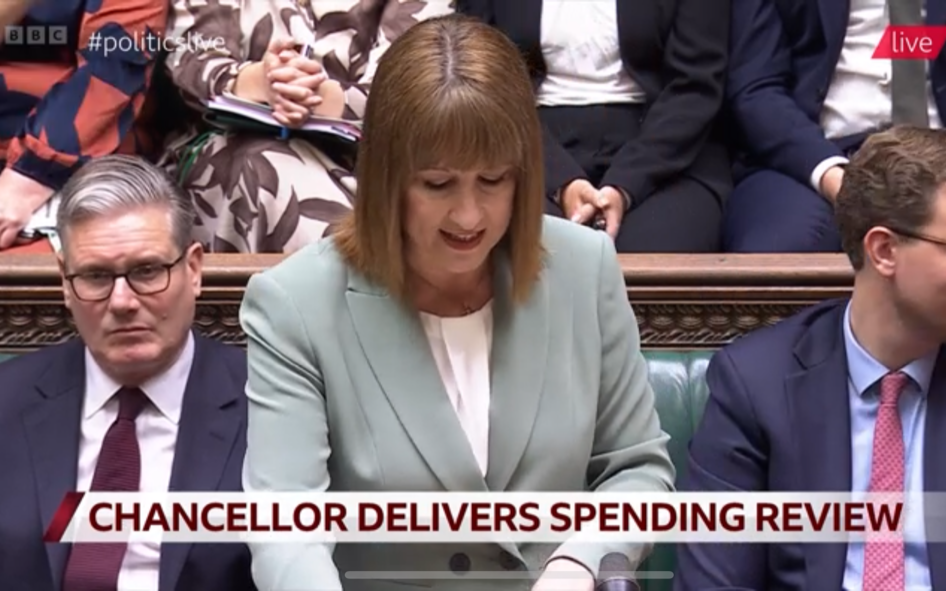
    The UK Chancellor’s Spending Review has allocated £445 million to Welsh railways over a ten-year period. However, politicians and analysts across Wales have quickly criticised this move, calling it inadequate and long overdue.

    Chancellor Rachel Reeves’s announcement was initially promoted as a significant boost for Welsh rail infrastructure, with claims that the package surpassed what Wales would have received under the Barnett formula if HS2 had been funded. However, a closer examination reveals that only £48 million will be allocated for enhancements on the devolved Core Valley Lines within the next four years. Critics argue that spreading the remaining funds over a decade significantly reduces their value in real terms.

    According to the Wales Governance Centre figures, labelling HS2 as an “England and Wales” project has deprived Wales of approximately £845 million in consequential funding between 2016 and 2030. This amount far exceeds the new rail investment and highlights a funding mechanism that continues disadvantaging Welsh infrastructure projects.

    While the Spending Review mentions the Borderlands Line and the Cardiff–Bristol route, it provides little detail regarding transparency and delivery timelines. Although the Treasury insists that most of the £445 million will be spent over ten years, scepticism remains high.

    Welsh Conservative Senedd leader Darren Millar called the investment “shameful” and “an insult to the people of Wales.” Meanwhile, Plaid Cymru’s Heledd Fychan accused the Welsh Labour government of settling for too little. “Public services, already on the brink in Wales under Labour, face further cuts because the First Minister asked for very little and received exactly that,” she said.

    The Spending Review does, however, increase the Welsh Government’s overall annual budget to an average of £22.4 billion over the next three years. This includes a real-terms increase in NHS spending, reflecting a 3% rise in day-to-day health budgets in England. However, with healthcare already consuming half of the Welsh budget, experts warn that other services may suffer.

    The Institute for Fiscal Studies (IFS) estimates that while public service funding will grow by 1.2% above inflation, increased demands from the NHS could consume most of this rise. “That will likely require tough choices and real-term cuts for some services,” said David Phillips from the IFS.

    First Minister Eluned Morgan attempted to frame the settlement more positively, highlighting investments in coal tip safety and community benefits. “Wales will see significant extra investment in rail infrastructure and communities,” she said.

    Nevertheless, the consensus among critics is clear. Despite the headline-grabbing figure, the £445 million rail package falls far short of addressing systemic funding inequalities, especially considering the exclusion of Wales from HS2 funding. With growing calls for a fairer fiscal framework, today’s announcement may be remembered more for what it fails to deliver than for what it promises than what it promises.

  • Local news crisis: help us regenerate independent local news 

    Big tech greed, corporate takeovers and declining advertising revenues mean that Britain’s independent local news providers are facing a tough battle to get trustworthy information into the hands of communities. 

    Misinformation is on the rise. In the hardest-hit areas, disinformation is stoking up tension and riots are breaking out. Networks are being manipulated. Convincing, AI-generated deepfakes are fooling even the most sceptical users.  

    People need reliable information and shared understandings to participate meaningfully in their community. And yet, the local news crisis in the UK has left over 4 million Brits living in news deserts – areas that are entirely without quality local journalism.  

    No news is bad news. Something needs to change.  

    Local people deserve reliable information that speaks to them, for them and with them. They need news providers that live in their communities and walk alongside them, that speak truth to power, celebrate local heroes and shine a light on local issues. 

    Across the country, a dedicated movement of independent journalists is holding power to account, strengthening pride in place and supporting people to take part in their communities. 

    But more than ever, local news outlets need our support. They are fighting to keep local news alive. 

    We need politicians to step up to the challenge of regenerating local news, so that indie news providers can continue getting information to the people who need it most for generations to come. 

    We ASPIRE for better news: local news that is Accountable, Sustainable, in the Public interest, Innovative, Representative and Engaging (‘ASPIRE’). 

    That’s why the Local News commission, supported by the Public Interest News Foundation, has come up with a plan to solve the local news crisis by 2035, by calling on the government to support six recommendations: 

    1. A Local News Stimulation Fund of £15m for the next 10 years to help local news make the digital transition. 
    2. Incentives for philanthropists, big tech and members of the public to support local news. 
    3. A workforce plan to ensure that journalists are drawn from all backgrounds and equipped to serve their communities. 
    4. A fair deal for local news providers using the new Digital Markets, Competition and Consumers Act to level the playing field with big tech 
    5. A new deal between local government and local news in which local communities are informed and empowered 
    6. A new relationship between the BBC and local news at Charter Renewal in 2027 building on the Local Democracy Reporting Service. 

    Sign the Public Interest News Foundation’s petition to call on the government to ensure a bright future for local news for generations to come: https://chng.it/tzx2J5qDXW  

    About the Public Interest News Foundation (PINF) 

    PINF is the UK’s first and only charity helping indie news thrive. PINF’s advocacy and research is shaped by our network of over 100 local, independent, public interest news providers from all corners of the UK: from Devon to Shetland, Newry to Caerphilly. As an independent charity, PINF is not dependent on the government or the legacy news industry for support. We are funded by generous individual donors, companies, trusts and foundations, giving us the freedom to form our own vision of the future. 

    QR code 

  • Indie News Week 2025: “No News is Bad News”

    Huw Marshall, Founder Talking Wales

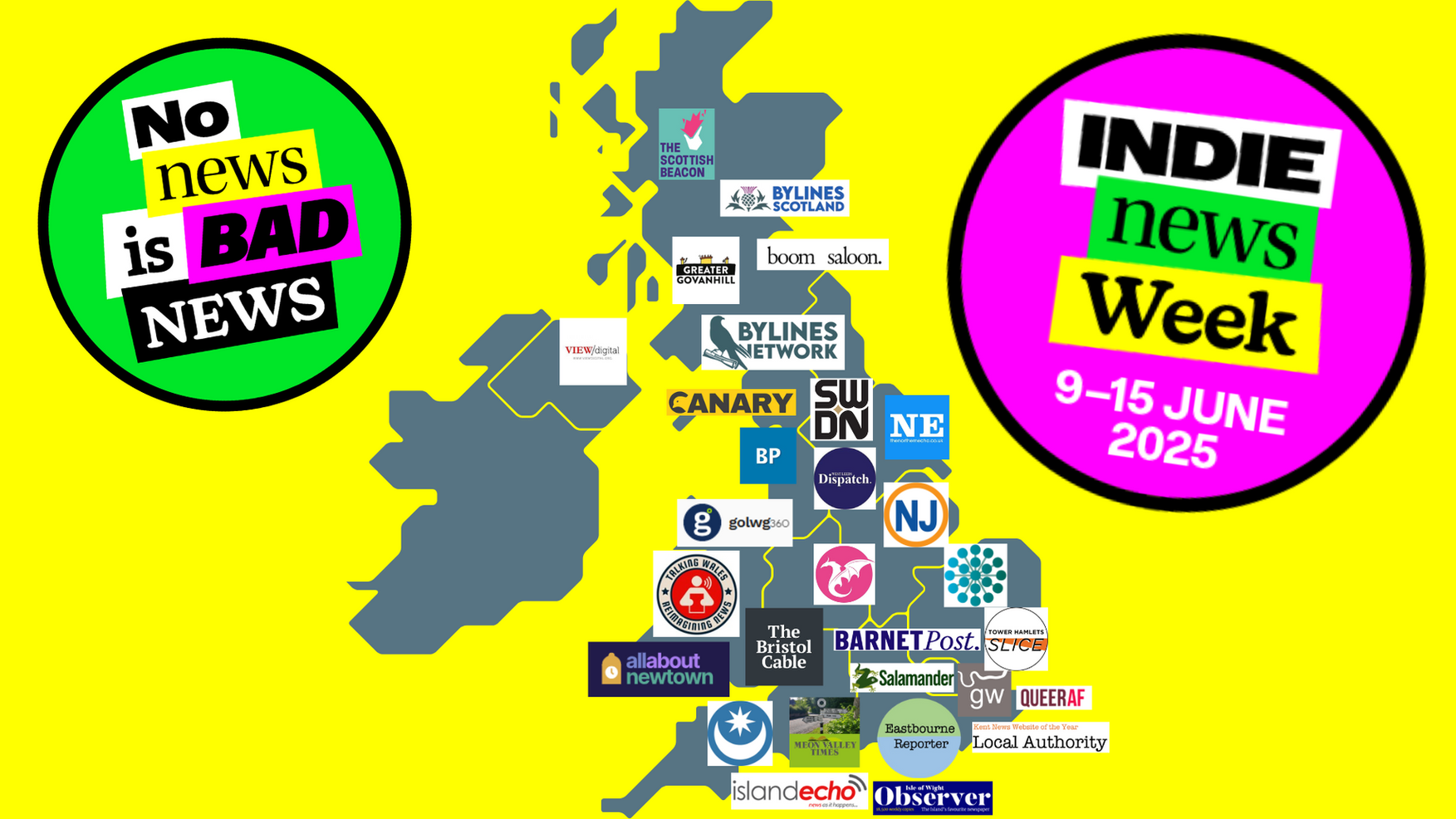
    The second annual Indie News Week starts today, Monday, June 9th, and runs until Saturday, June 15th, 2025. Dedicated to celebrating and supporting the UK’s independent news sector, it was launched by the Public Interest News Foundation (PINF) in 2024. The initiative highlights the vital role that local community-led outlets play in sustaining democracy, fostering public engagement, and filling critical information gaps left by declining mainstream media.

    Why does Indie News Week Matter?
    Local news is facing dramatic challenges. We have written extensively about the challenges facing public interest news in Wales and further afield, from the rise of digital platforms absorbing advertising revenue to corporate consolidation and closures of local news outlets. Under the banner “No News is Bad News,” Indie News Week aims to raise awareness, foster community interaction, and amplify fundraising efforts for indie newsrooms.

    Stronger Together
    Collaboration is at the heart of this year’s events. For instance, South West Durham News and The Northern Eco will share a newsroom during Indie News Week, hosting podcasts, open doors, guided nature walks and market stalls.

    These activities offer the public an insider view of journalism—how stories are crafted, verified, and published.


    The Bylines Network are hosting a panel discussion focused on equality and diversity in indie media. Funded through coordinated community journalism, Bylines highlights how underrepresented voices can reshape newsrooms and challenge mainstream media narratives.

    Across the UK
    From Shetland to Eastbourne, Belfast to Bethesda, over 30 independent outlets will host local events, from quizzes and symposiums to online meet‑ups.

    The Public Interest News Foundation’s director, Jonathan Heawood, told Hold the Front Page: “Communities deserve healthy news ecosystems that facilitate the free flow of information, speak truth to power and shine a light on important issues.”

    More Than a Week
    Indie News Week isn’t just a celebration; it’s about advocacy. The Public Interest News Foundation has launched a petition urging the UK Government to support local news infrastructure, backing Culture Secretary Lisa Nandy’s pledge for reliable news services in every town and village.


    Importantly, the week also builds capacity. Outlets report increased confidence and skills after participating: better fundraising, community engagement, and collaboration that fortify their resilience against systemic challenges.

    Looking Ahead
    Indie News Week underscores just how much is at stake when community media thrives or dies. Successful initiatives show that indie outlets can flourish with public backing through donations, subscriptions, crowdfunding, and accessible local engagement. As the sector evolves, the campaign aims to sustain and scale support.

    Talking Wales has launched a new website as part of Indie News Week, and is starting conversations around critical issues such as immigration, the Senedd elections in May 2026 and news provision in Wales as we develop our new service.

     
    Indie News Week is a great starting point if you’d like to support Talking Wales. Less news means less community; as the campaign reminds us, no news is bad news.

  • Public Interest News in an Ideal World

    Home » News » Public Interest News in an Ideal World

    A plan for Wales

    I regularly write about the challenges public interest news faces in Wales and further afield, mainly due to legacy news publishers’ failing business models.

    There is a general consensus on the importance of public interest news, that is, news that informs the public regarding matters that impact their daily lives. It helps people make sense of the world they live in, tells them about the actions and activities of local and national governments and done well explains why the cost of a tin of baked beans has increased in the past 12 months, why getting a doctor’s appointment can be a challenge and why accessing affordable housing is becoming increasingly difficult.

    So, what would the perfect public interest news service look like?

    Accessibility:

    Accessibility refers to the availability of information across various platforms, including online, YouTube, social media, and radio, in a range of formats, including audio, video, text, and print. It also relates to how news and information are presented to the public; it must be easy to understand, trustworthy and relatable considering the intended audience.

    To be fully accessible, it needs to be free to access.

    Value:

    Public interest news plays a crucial role in society by providing information that is essential for the well-being and functioning of communities. This can be summed up in five ways.

    An Informed Citizenry: It helps people stay informed about important issues, enabling them to make educated decisions, particularly in democratic processes like voting.

    Accountability: Public interest journalism holds those in power accountable by investigating and exposing corruption, misconduct, and other issues that may otherwise go unnoticed.

    Transparency: It promotes transparency by shedding light on government actions, corporate practices, and other activities that affect the public.

    Community Engagement: By covering local issues and events, public interest news fosters a sense of community and encourages civic engagement.

    Public Good: It serves as a public good by providing information that benefits society as a whole, even if not everyone directly consumes it.

    Its societal value is clear; getting the public to value it is a different matter.

    As a society, we contribute to the cost of services through taxation, which provides our health and education services, keeps our roads in working condition, and keeps our streets free, where possible, of crime. This overview is slightly simplistic, but I’m sure you get the gist. For a society to function correctly, we must fund it.

    We know that accessibility to impartial and factual information is a cornerstone of a healthy democracy.

    Only 8% of the UK public currently pay for news, slightly lower than the 16% in the USA and substantially lower than the 40% in Norway.

    There could be several factors at play here. Much of the news in the UK is free to access, funded through advertising or, in the case of the BBC, via the licence fee, which some would say is a form of tax. The quality of the news may well affect people’s perception of value. Some consumers may not see enough value in paid news subscriptions, especially when they can access similar information for free. The perceived value of exclusive content versus commoditised news can influence their willingness to pay.

    The war in Ukraine and the cost-of-living crisis have affected people’s willingness to fund news. When drawing up a list of financial priorities, a news subscription is an obvious target for the chop.

    So, what’s the answer?

    We build a community that cares about Wales and its future, values democracy, and wants Welsh citizens and the global Welsh diaspora to have access to information that helps them engage in democratic processes, giving them agency from an informed and educated perspective.

    A community that’s invested in the numerous societal benefits a Welsh public interest news would deliver.

    We need to take a new approach to creating and delivering news, and a new business model is required to fund that service.

    The Service:

    A new approach to delivering news with innovation at its heart. A new public square discussing the issues that matter to people. We won’t follow the news agenda; we’ll create our own daily agenda.

    Giving Wales a voice through a daily national conversation on Wales’ first dedicated talk/news digital radio station. Listening to people in Wales, exploring and challenging the issues they care about, and getting answers to the questions they want to be answered.

    Making sense of Wales, how it functions, and how Welsh citizens can contribute to the democratic process. Sharing information in relatable and accessible formats via a dedicated website, social media channels, LinkedIn, WhatsApp, and YouTube.

    Regular newsletters delivered straight to your inbox—podcasts on various topics, including Welsh politics, culture and history.

    We’ll host virtual and in-person events where our community can meet, hear from and question policymakers and experts and discuss Wales.

    The Business Model:

    How we fund a Welsh public interest news service is critical to its long-term success. That’s why Talking Wales will be community-owned. A community that shares a desire to ensure every Welsh citizen has access to the news and information that allows them to understand the Wales they live in and take informed decisions at the ballot box.

    A community that values the contribution of accessible public interest news and its potential benefits to Welsh society.

    An annual membership, payable monthly or annually, will fund our day-to-day operations and pay staff costs. This membership will also provide voting rights at the Annual General Meeting and access to exclusive content and events.

    Talking Wales will issue community shares. These shares do not increase in value but attract a modest level of interest. After a specific time period, they can be sold back to Talking Wales when it is in a financial position to repurchase them. The door will be open to institutional impact investors, businesses, and organisations that wish to include ethical and impactful investments in their investment portfolios.

    This will give Talking Wales the required capital to grow annual revenues.

    Our target is to achieve a membership of 10,000 individuals who care passionately about democracy and are invested in ensuring Welsh citizens have access to the objective, independent news and information they need and deserve.

  • What? How? Why?

    What?

    Talking Wales – a public interest news service for Wales.

    Public interest news is, at its core, news that serves the public good. It focuses on providing information that:

    • Empowers citizens.
    • Holds power accountable.
    • Facilitates informed democracy.
    • Prioritizes truth and accuracy.

    Think of it as news that equips people to be active and engaged citizens in a healthy democracy. It’s not just about reporting facts, but about providing context, analysis, and a platform for diverse voices to be heard.

    That’s what we’ll be delivering at Talking.Wales. A service that:

    • Focuses on issues of broad public concern: not just sensational stories or personal scandals.
    • Conducts investigative journalism: uncovering hidden truths and holding power to account.
    • Is independent and accountable: not beholden to special interests or political agendas.
    • Promotes accessibility and inclusivity: reaching diverse audiences and giving voice to the marginalized.
    • Will be committed to fact-checking and verification: upholding reliable and accurate information.

    Public interest news is vital for a healthy democracy. By supporting independent journalists that uphold these principles you can help keep our communities in Wales informed and engaged.

    How?

    Wales’ first talk radio station: Leading the news agenda in Wales, keeping you updated with what’s happening throughout the day, with a range of voices helping to make sense of the issues of the day, and giving the people of Wales a space to share their views and concerns. It will also be a home for a range of podcasts covering different topics from a Welsh perspective.

    YouTube channel: A home for discussions about Wales and for you to tell the stories of your communities.

    A dedicated Welsh news website updated regularly throughout the day with regular features and opinion pieces.

    Social Media: Sharing our content in relevant, accessible, formats across a range of platforms. If you get your news from social media, you’ll get the story in its entirety without the need to click through to a website.

    Regular newsletters on a range of topics, from a daily digest to specialisms such as education, health, and the environment.

    Events, in person, online and hybrid. We’ll be starting a national conversation and taking that conversation around Wales where you can hear from and challenge decision-makers and influencers.

    Why?

    Ultimately, a vibrant, diverse, and accessible public interest news service for Wales, utilizing a multi-platform approach, can strengthen the foundations of Welsh democracy by empowering citizens, holding power to account, and celebrating the unique voice of Wales.

    Countering the decline of traditional media: Wales has faced a steady decline in local and regional news outlets, leading to “news deserts” where information is scarce. This creates a democratic deficit, as citizens lack the vital information needed to hold their representatives accountable and engage meaningfully in civic life. A public interest news service can fill these gaps, ensuring diverse and accessible coverage of issues relevant to Welsh communities.

    Reaching a wider audience: Traditional media often struggles to reach younger generations and diverse communities. Using a multi-platform approach can attract these audiences through formats they prefer, like podcasts and social media. This fosters democratic participation by ensuring everyone has access to accurate and reliable information, regardless of their background or media preferences.

    Holding power to account: A dedicated public interest news service can play a crucial role in investigative journalism, scrutinizing the actions of government, businesses, and other powerful actors. This holds them accountable to the public and strengthens democratic principles. Independent journalism, free from commercial pressures, can expose injustices and spark necessary conversations about critical issues.

    Promoting Welsh identity and language: Wales has a rich cultural heritage and unique social challenges. A dedicated news service can give these issues due attention, fostering a stronger sense of national identity and celebrating Welsh culture. Additionally, incorporating Welsh language options in podcasts, newsletters, and social media can promote its vitality and accessibility.

    Encouraging active citizenship: By providing in-depth analysis, diverse viewpoints, and opportunities for public engagement, such as live calls-in or online forums, a public interest news service can empower citizens to participate actively in democratic processes. This fosters a more informed and engaged citizenry, which is essential for a healthy democracy.

    Owned and funded by you, we’ll be answerable to you.

  • What Makes a News Service?

    Its staff, specifically the journalists it employs.

    What makes an effective news service? Giving time to journalists to research, investigate and publish their stories, to follow up and publish updates.

    The general public would be surprised to learn how few journalists are employed by some outlets with many relying on press releases to bolster their output.

    Quality, not quantity.

    You may notice that some outlets publish a lot of content every day, some serious journalism and a lot of inconsequential pieces. Why?

    The majority of digital news sites derive income from advertising, how much they earn is based on the number of page views they generate. The majority of stories published aren’t read in big numbers, editors are seeking that breakout story every day, one that will drive tens or hundreds of thousands of page views.

    This is why many publishers incentivise journalists with bonuses linked to monthly page view targets. It’s not about the quality of a story or its impact its all about the number of page views it generates.

    Publishing a substantial number of stories every day creates a cumulative number of page views, and increases the odds of publishing the piece that generates the big numbers, enough to satisfy advertisers and generate revenues for owners and shareholders.

    It shouldn’t be like this. We won’t be driven by page views.

    We will focus on the stories of the day that matter, the stories that impact the day-to-day lives of Welsh citizens. We will ask questions of government at national and local levels and most importantly demand answers, and if answers aren’t forthcoming use all the tools at our disposal to ensure the public is kept fully informed. We won’t be a platform for publishing press releases.

    We will be creating a space where policy ideas can be discussed and commission pieces from experts in their fields.

    We will focus on the key devolved responsibilities, Health, Education and of course the Economy.

    How will it be funded?

    Initially through investment via a share issue. You will be able to own a stake in the company. As Community Benefit Society shares don’t increase in value but they will attract interest.

    In the long-term subscriptions will fund our work, your monthly subscriptions will not only give you access to exclusive content, they will also allow us to employ journalists. The more who subscribe the more we will employ.

    Any profits generated will be reinvested into the service, that’s not just a promise it’s a requirement for Community Benefit Societies.

    We’re building a company for the long term and you can be part of it.

    Like the sound of what we’re developing? Become a supporter today, click the button below