Talking Wales

  • Our news is broken

    And we have a plan to fix it.

    I’m back from a two-week family holiday in France, and it was also a partial two-week break from the news. As a desk-based news junkie, I’m constantly consuming news via radio and online, so restricting my news diet gave me a new perspective on how ordinary people consume news.

    August is generally a quiet news month, with the doors of the Senedd and Westminster closed until September. Proof of which was me bumping into the shadow Home Secretary James Cleverley on an evening stroll around La Flotte harbour. 

    Without the usual parliamentary chatter, news providers become more reliant on generating actual news. So, what did I hear and see?

    Immigration, immigration, the war in Ukraine, Gaza, Trump and immigration.

    If an alien landed on Earth today, it would be a huge news story, not just because it would prove the existence of extraterrestrial life, as a literal alien, it would face the wrath of the UK and US public, who apparently see immigration as an increasing problem.

    Immigration is constantly framed as a problem, not just by the usual suspects on the right, but also, more concerningly, the BBC.

    The BBC remains, by far, the most influential news outlet in the UK, as confirmed by Ofcom’s annual research into news consumption habits.

    Much of the news about immigration I accessed over the last two weeks focused on the Epping “asylum” hotel and the ensuing protests. Much of the BBC’s output involves reporting on events that have occurred; however, reporting without sufficient context can skew people’s perspectives on real life. On Saturday, the BBC were reporting on predicted trouble at anti-immigration protests being held across the UK, and their online coverage of Lucy Connolly’s interview in the Telegraph drew a great deal of ire from commentators. Connolly pleaded guilty to inciting racial hatred after calling on people to set fire to hotels housing immigrants on X following the tragic murder of three young girls in Southport, which had been falsely attributed to an asylum seeker who had arrived by small boat. In the Telegraph piece, she claimed to have been a “political prisoner”.

    The BBC do share content that attempts to provide context and balance in their coverage, but in the two examples shown above, “How many people cross the Channel in small boats?” and “Migration: How many people come to work and study in the UK?” they fail to convey relevant information in an easy to understand and accessible manner.

    The fact that immigration is primarily framed as a problem or issue has clearly impacted the public’s views. In the past two weeks, research by YouGov has revealed that 47% of the UK public believe that immigration is primarily illegal, despite the actual statistics showing that not to be the case, and by some margin. Approximately 77% of non-EU immigrants came to the UK to study, while around 20% sought asylum or arrived on humanitarian grounds. This percentage has increased despite the numbers remaining relatively steady; the increase is due to a decline in the number of people coming here to work and study.

    According to the August 2025 Ipsos Issues Index, a staggering 48% of the population sees immigration as the biggest issue of the day 15% ahead of the economy, and 26% ahead of the NHS. 31% of respondents feel that their local area is housing more than its fair share of asylum seekers; this figure doubles to 61% when those who voted Reform at the last election are questioned.

    Granted, these are national polls, and little research has been conducted at a Wales level, but is the constant reporting on immigration and its framing as a problem having an impact here?

    Reform is riding high in the polls in Wales and, alongside Plaid Cymru, has been leading in the political popularity contest. With a policy platform built primarily on eliminating immigration, blaming it for the pressures on public services and housing, how does this stack up in Wales?

    There are a few byelections on the horizon in Wales. In the Vale of Glamorgan, there are two: a town council election in Cowbridge and a County Council election in Barry. In Caerffili a Senedd byelection is to be contested following the untimely death of Dr Hefin David, at the age of 47, the Labour MS for the constituency.

    The Vale of Glamorgan is home to approximately 132,000 residents, of these seventeen, yes 17 – SEVENTEEN – are asylum seekers being housed by the local authority. The impact these seventeen individuals have on local services and housing availability is statistically negligible.

    The situation in Caerffili is similar, with 176,000 residents, seventy-seven are asylum seekers being housed by the local authority. Caerffili is one of the few Welsh boroughs that have seen its population fall during the previous decade. In 2011, it had 178,000 residents, so any issue with housing availability there certainly has nothing to do with immigration.

    Around 20% of staff in the UK’s health and social care sector have come from overseas; without these individuals, the health and social care sectors in Wales could well collapse.

    How immigration is reported is essential; without having all the facts, how can Welsh citizens be expected to make informed decisions at the ballot box?

    There’s a genuine need to change how news is delivered today. There is a need not only to inform but to educate, a need to distribute news and information in accessible formats across as wide a range of platforms as possible.

    There’s also a need to change how news companies are run, prioritising transparency and honesty over profit.

    That’s why Talking Wales exists, a cooperatively owned public interest news service for Wales, operating across radio, YouTube, social media, email newsletters, in-person events, print and the internet.

    We’re currently working on a series of pieces examining two of the most deprived council wards in Wales, according to the Welsh Index of Multiple Deprivation. Caerau, located above Maesteg and Tylorstown in the Rhondda Cynon Taf area, is another of these wards. Both were in the top five of the 2019 WIMD, and both are 98% White, of Welsh/British descent.

    We’ll be speaking to residents, community leaders and those working to support both communities to find out why these places have been left behind and what can be done to improve their communities and individual prospects.

    We’re seeking the absolute truth about why people are unable to access public services, find adequate housing, and secure employment opportunities. We will be sharing our findings in a range of formats across multiple platforms.

    If you’d like to learn more about Talking Wales and get involved, visit https://talking.wales

    Diolch

    Huw Marshall

    Founder – Talking Wales

  • Indie News Week 2025: “No News is Bad News”

    Huw Marshall, Founder Talking Wales

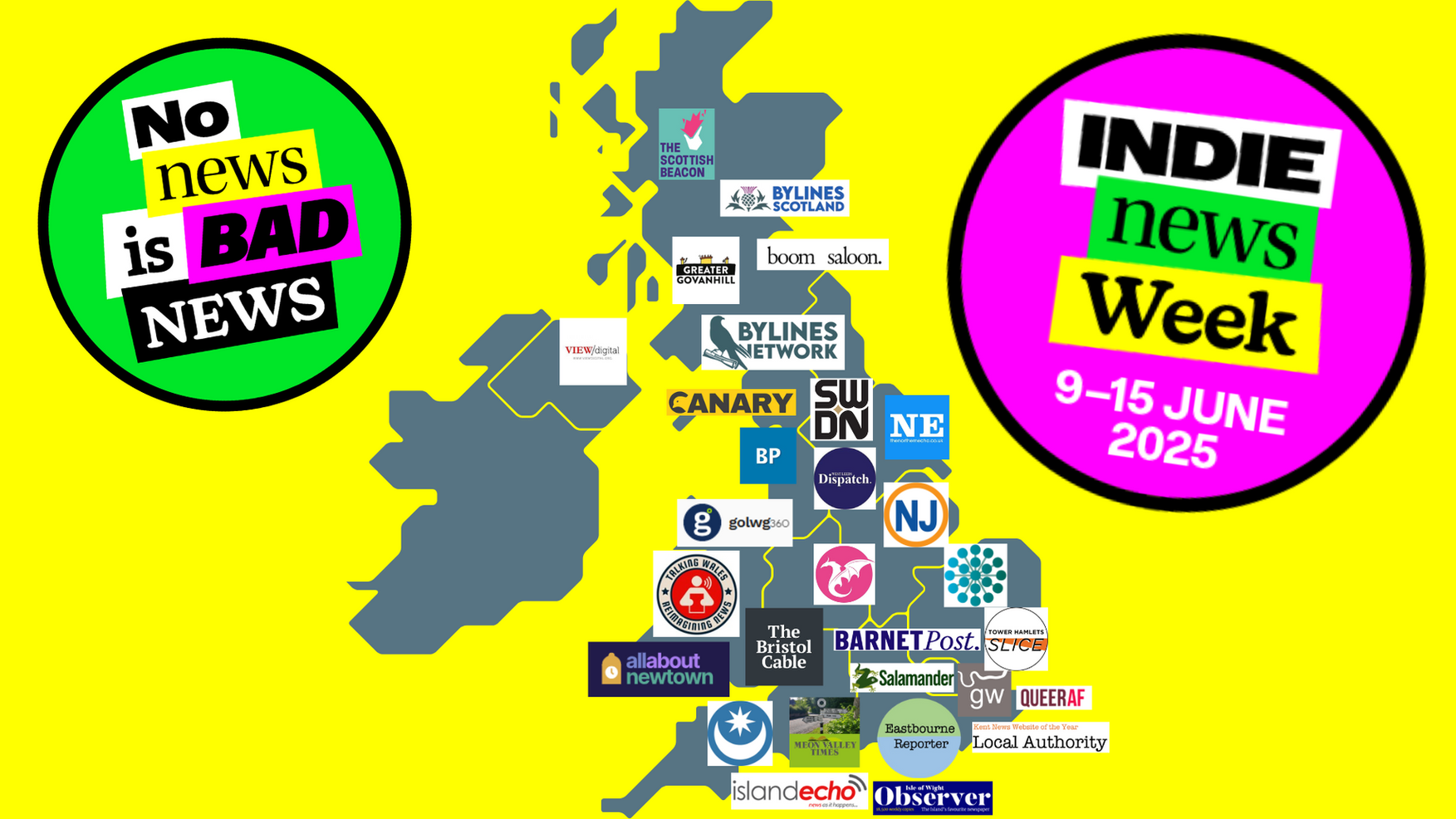
    The second annual Indie News Week starts today, Monday, June 9th, and runs until Saturday, June 15th, 2025. Dedicated to celebrating and supporting the UK’s independent news sector, it was launched by the Public Interest News Foundation (PINF) in 2024. The initiative highlights the vital role that local community-led outlets play in sustaining democracy, fostering public engagement, and filling critical information gaps left by declining mainstream media.

    Why does Indie News Week Matter?
    Local news is facing dramatic challenges. We have written extensively about the challenges facing public interest news in Wales and further afield, from the rise of digital platforms absorbing advertising revenue to corporate consolidation and closures of local news outlets. Under the banner “No News is Bad News,” Indie News Week aims to raise awareness, foster community interaction, and amplify fundraising efforts for indie newsrooms.

    Stronger Together
    Collaboration is at the heart of this year’s events. For instance, South West Durham News and The Northern Eco will share a newsroom during Indie News Week, hosting podcasts, open doors, guided nature walks and market stalls.

    These activities offer the public an insider view of journalism—how stories are crafted, verified, and published.


    The Bylines Network are hosting a panel discussion focused on equality and diversity in indie media. Funded through coordinated community journalism, Bylines highlights how underrepresented voices can reshape newsrooms and challenge mainstream media narratives.

    Across the UK
    From Shetland to Eastbourne, Belfast to Bethesda, over 30 independent outlets will host local events, from quizzes and symposiums to online meet‑ups.

    The Public Interest News Foundation’s director, Jonathan Heawood, told Hold the Front Page: “Communities deserve healthy news ecosystems that facilitate the free flow of information, speak truth to power and shine a light on important issues.”

    More Than a Week
    Indie News Week isn’t just a celebration; it’s about advocacy. The Public Interest News Foundation has launched a petition urging the UK Government to support local news infrastructure, backing Culture Secretary Lisa Nandy’s pledge for reliable news services in every town and village.


    Importantly, the week also builds capacity. Outlets report increased confidence and skills after participating: better fundraising, community engagement, and collaboration that fortify their resilience against systemic challenges.

    Looking Ahead
    Indie News Week underscores just how much is at stake when community media thrives or dies. Successful initiatives show that indie outlets can flourish with public backing through donations, subscriptions, crowdfunding, and accessible local engagement. As the sector evolves, the campaign aims to sustain and scale support.

    Talking Wales has launched a new website as part of Indie News Week, and is starting conversations around critical issues such as immigration, the Senedd elections in May 2026 and news provision in Wales as we develop our new service.

     
    Indie News Week is a great starting point if you’d like to support Talking Wales. Less news means less community; as the campaign reminds us, no news is bad news.

  • Public Interest News in an Ideal World

    Home » News » Public Interest News in an Ideal World

    A plan for Wales

    I regularly write about the challenges public interest news faces in Wales and further afield, mainly due to legacy news publishers’ failing business models.

    There is a general consensus on the importance of public interest news, that is, news that informs the public regarding matters that impact their daily lives. It helps people make sense of the world they live in, tells them about the actions and activities of local and national governments and done well explains why the cost of a tin of baked beans has increased in the past 12 months, why getting a doctor’s appointment can be a challenge and why accessing affordable housing is becoming increasingly difficult.

    So, what would the perfect public interest news service look like?

    Accessibility:

    Accessibility refers to the availability of information across various platforms, including online, YouTube, social media, and radio, in a range of formats, including audio, video, text, and print. It also relates to how news and information are presented to the public; it must be easy to understand, trustworthy and relatable considering the intended audience.

    To be fully accessible, it needs to be free to access.

    Value:

    Public interest news plays a crucial role in society by providing information that is essential for the well-being and functioning of communities. This can be summed up in five ways.

    An Informed Citizenry: It helps people stay informed about important issues, enabling them to make educated decisions, particularly in democratic processes like voting.

    Accountability: Public interest journalism holds those in power accountable by investigating and exposing corruption, misconduct, and other issues that may otherwise go unnoticed.

    Transparency: It promotes transparency by shedding light on government actions, corporate practices, and other activities that affect the public.

    Community Engagement: By covering local issues and events, public interest news fosters a sense of community and encourages civic engagement.

    Public Good: It serves as a public good by providing information that benefits society as a whole, even if not everyone directly consumes it.

    Its societal value is clear; getting the public to value it is a different matter.

    As a society, we contribute to the cost of services through taxation, which provides our health and education services, keeps our roads in working condition, and keeps our streets free, where possible, of crime. This overview is slightly simplistic, but I’m sure you get the gist. For a society to function correctly, we must fund it.

    We know that accessibility to impartial and factual information is a cornerstone of a healthy democracy.

    Only 8% of the UK public currently pay for news, slightly lower than the 16% in the USA and substantially lower than the 40% in Norway.

    There could be several factors at play here. Much of the news in the UK is free to access, funded through advertising or, in the case of the BBC, via the licence fee, which some would say is a form of tax. The quality of the news may well affect people’s perception of value. Some consumers may not see enough value in paid news subscriptions, especially when they can access similar information for free. The perceived value of exclusive content versus commoditised news can influence their willingness to pay.

    The war in Ukraine and the cost-of-living crisis have affected people’s willingness to fund news. When drawing up a list of financial priorities, a news subscription is an obvious target for the chop.

    So, what’s the answer?

    We build a community that cares about Wales and its future, values democracy, and wants Welsh citizens and the global Welsh diaspora to have access to information that helps them engage in democratic processes, giving them agency from an informed and educated perspective.

    A community that’s invested in the numerous societal benefits a Welsh public interest news would deliver.

    We need to take a new approach to creating and delivering news, and a new business model is required to fund that service.

    The Service:

    A new approach to delivering news with innovation at its heart. A new public square discussing the issues that matter to people. We won’t follow the news agenda; we’ll create our own daily agenda.

    Giving Wales a voice through a daily national conversation on Wales’ first dedicated talk/news digital radio station. Listening to people in Wales, exploring and challenging the issues they care about, and getting answers to the questions they want to be answered.

    Making sense of Wales, how it functions, and how Welsh citizens can contribute to the democratic process. Sharing information in relatable and accessible formats via a dedicated website, social media channels, LinkedIn, WhatsApp, and YouTube.

    Regular newsletters delivered straight to your inbox—podcasts on various topics, including Welsh politics, culture and history.

    We’ll host virtual and in-person events where our community can meet, hear from and question policymakers and experts and discuss Wales.

    The Business Model:

    How we fund a Welsh public interest news service is critical to its long-term success. That’s why Talking Wales will be community-owned. A community that shares a desire to ensure every Welsh citizen has access to the news and information that allows them to understand the Wales they live in and take informed decisions at the ballot box.

    A community that values the contribution of accessible public interest news and its potential benefits to Welsh society.

    An annual membership, payable monthly or annually, will fund our day-to-day operations and pay staff costs. This membership will also provide voting rights at the Annual General Meeting and access to exclusive content and events.

    Talking Wales will issue community shares. These shares do not increase in value but attract a modest level of interest. After a specific time period, they can be sold back to Talking Wales when it is in a financial position to repurchase them. The door will be open to institutional impact investors, businesses, and organisations that wish to include ethical and impactful investments in their investment portfolios.

    This will give Talking Wales the required capital to grow annual revenues.

    Our target is to achieve a membership of 10,000 individuals who care passionately about democracy and are invested in ensuring Welsh citizens have access to the objective, independent news and information they need and deserve.

  • What? How? Why?

    What?

    Talking Wales – a public interest news service for Wales.

    Public interest news is, at its core, news that serves the public good. It focuses on providing information that:

    • Empowers citizens.
    • Holds power accountable.
    • Facilitates informed democracy.
    • Prioritizes truth and accuracy.

    Think of it as news that equips people to be active and engaged citizens in a healthy democracy. It’s not just about reporting facts, but about providing context, analysis, and a platform for diverse voices to be heard.

    That’s what we’ll be delivering at Talking.Wales. A service that:

    • Focuses on issues of broad public concern: not just sensational stories or personal scandals.
    • Conducts investigative journalism: uncovering hidden truths and holding power to account.
    • Is independent and accountable: not beholden to special interests or political agendas.
    • Promotes accessibility and inclusivity: reaching diverse audiences and giving voice to the marginalized.
    • Will be committed to fact-checking and verification: upholding reliable and accurate information.

    Public interest news is vital for a healthy democracy. By supporting independent journalists that uphold these principles you can help keep our communities in Wales informed and engaged.

    How?

    Wales’ first talk radio station: Leading the news agenda in Wales, keeping you updated with what’s happening throughout the day, with a range of voices helping to make sense of the issues of the day, and giving the people of Wales a space to share their views and concerns. It will also be a home for a range of podcasts covering different topics from a Welsh perspective.

    YouTube channel: A home for discussions about Wales and for you to tell the stories of your communities.

    A dedicated Welsh news website updated regularly throughout the day with regular features and opinion pieces.

    Social Media: Sharing our content in relevant, accessible, formats across a range of platforms. If you get your news from social media, you’ll get the story in its entirety without the need to click through to a website.

    Regular newsletters on a range of topics, from a daily digest to specialisms such as education, health, and the environment.

    Events, in person, online and hybrid. We’ll be starting a national conversation and taking that conversation around Wales where you can hear from and challenge decision-makers and influencers.

    Why?

    Ultimately, a vibrant, diverse, and accessible public interest news service for Wales, utilizing a multi-platform approach, can strengthen the foundations of Welsh democracy by empowering citizens, holding power to account, and celebrating the unique voice of Wales.

    Countering the decline of traditional media: Wales has faced a steady decline in local and regional news outlets, leading to “news deserts” where information is scarce. This creates a democratic deficit, as citizens lack the vital information needed to hold their representatives accountable and engage meaningfully in civic life. A public interest news service can fill these gaps, ensuring diverse and accessible coverage of issues relevant to Welsh communities.

    Reaching a wider audience: Traditional media often struggles to reach younger generations and diverse communities. Using a multi-platform approach can attract these audiences through formats they prefer, like podcasts and social media. This fosters democratic participation by ensuring everyone has access to accurate and reliable information, regardless of their background or media preferences.

    Holding power to account: A dedicated public interest news service can play a crucial role in investigative journalism, scrutinizing the actions of government, businesses, and other powerful actors. This holds them accountable to the public and strengthens democratic principles. Independent journalism, free from commercial pressures, can expose injustices and spark necessary conversations about critical issues.

    Promoting Welsh identity and language: Wales has a rich cultural heritage and unique social challenges. A dedicated news service can give these issues due attention, fostering a stronger sense of national identity and celebrating Welsh culture. Additionally, incorporating Welsh language options in podcasts, newsletters, and social media can promote its vitality and accessibility.

    Encouraging active citizenship: By providing in-depth analysis, diverse viewpoints, and opportunities for public engagement, such as live calls-in or online forums, a public interest news service can empower citizens to participate actively in democratic processes. This fosters a more informed and engaged citizenry, which is essential for a healthy democracy.

    Owned and funded by you, we’ll be answerable to you.

  • What Makes a News Service?

    Its staff, specifically the journalists it employs.

    What makes an effective news service? Giving time to journalists to research, investigate and publish their stories, to follow up and publish updates.

    The general public would be surprised to learn how few journalists are employed by some outlets with many relying on press releases to bolster their output.

    Quality, not quantity.

    You may notice that some outlets publish a lot of content every day, some serious journalism and a lot of inconsequential pieces. Why?

    The majority of digital news sites derive income from advertising, how much they earn is based on the number of page views they generate. The majority of stories published aren’t read in big numbers, editors are seeking that breakout story every day, one that will drive tens or hundreds of thousands of page views.

    This is why many publishers incentivise journalists with bonuses linked to monthly page view targets. It’s not about the quality of a story or its impact its all about the number of page views it generates.

    Publishing a substantial number of stories every day creates a cumulative number of page views, and increases the odds of publishing the piece that generates the big numbers, enough to satisfy advertisers and generate revenues for owners and shareholders.

    It shouldn’t be like this. We won’t be driven by page views.

    We will focus on the stories of the day that matter, the stories that impact the day-to-day lives of Welsh citizens. We will ask questions of government at national and local levels and most importantly demand answers, and if answers aren’t forthcoming use all the tools at our disposal to ensure the public is kept fully informed. We won’t be a platform for publishing press releases.

    We will be creating a space where policy ideas can be discussed and commission pieces from experts in their fields.

    We will focus on the key devolved responsibilities, Health, Education and of course the Economy.

    How will it be funded?

    Initially through investment via a share issue. You will be able to own a stake in the company. As Community Benefit Society shares don’t increase in value but they will attract interest.

    In the long-term subscriptions will fund our work, your monthly subscriptions will not only give you access to exclusive content, they will also allow us to employ journalists. The more who subscribe the more we will employ.

    Any profits generated will be reinvested into the service, that’s not just a promise it’s a requirement for Community Benefit Societies.

    We’re building a company for the long term and you can be part of it.

    Like the sound of what we’re developing? Become a supporter today, click the button below

  • Bringing you the latest news from Wales.

    Wales has suffered from a historical lack of national news services. The majority of the news we consume in Wales originates over the border.

    The Daily Mail and The Sun are the two most widely read newspapers in Wales and BBC Radio 2 is the most popular radio station.
    The pandemic has raised awareness around devolved matters, particularly health. But there is clearly a lack of scrutiny, discussion and debate when it comes to Welsh affairs at the Senedd and Westminster.

    It doesn’t have to be this way.

    Talking Wales will be a national news and media service for Wales. Reporting the news and discussing the issues that matter and impact the daily lives of Welsh citizens.

    We won’t be driven by page views, our focus will be on delivering an objective quality service based in fact in accessible formats across a range of platforms, mobile, online, social media, radio and TV.

    We’re setting up as a Community Benefit Society, this means that you, the employees of the company and institutions can own a stake in the business and that every penny of profit will be reinvested into providing services that benefit the community we serve, the citizens of Wales.

    We’ll soon be launching our Pioneer Share issue. 

  • A new approach to Welsh news and current affairs

    Three years ago, almost to the day, following several conversations on and offline, I set about improving the news landscape of Wales.

    With the support of hundreds of people via an initial crowdfunding effort and then Patreon I was able to research and develop a model for a sustainable news business that would emphasise public interest journalism.

    In a partnership with Wales’s second largest local news publisher, Newsquest, The National Wales was published on the 1st of March 2021 along with a special print edition to coincide with the launch of the website.

    The business model was based on a mix of subscription and advertising and was expected to become profitable during its third year of operation.

    Unfortunately, the impact of the economic downturn and the accompanying cost of living crisis hit the general news industry very hard, and Newsquest decided to withdraw its support for the title in August 2022. It ceased publishing on the 31st of August 2022.

    It was clearly a disappointing result and laid bare the risks of partnering with a company whose focus is purely commercial, as is the focus of the news industry in general today.

    The whole experience, whilst painful at times, was an incredible learning curve. The difference between researching an industry and actually working in one is worlds apart, and I have taken those learnings and applied them to a new venture, one that doesn’t rely on support from a global news business whose focus is on making a profit above all else.

    A revolution in news

    How audiences access news has undergone a revolution over the past decade. More platforms and formats for the delivery of news have seen audiences fragment. Traditional news companies have struggled to adapt as sales of physical newspapers continue their decline and their efforts to make money online have forced many into producing populist inconsequential content at the expense of real news.

    The biggest learning from my 18 months with The National Wales was the fact people do not read news online in the numbers required to generate sufficient advertising revenue, and the prevalence of advertising can make the user experience online painful.

    Subscription is the most sustainable model and Talking Wales will be subscription-based, generating additional revenues from related commercial activities. But it will need time to build that subscription base, something The National wasn’t given. That’s why it is vital that we secure sufficient funding to cover our running costs for the first two years of operation.

    The ethos of the business and the model of ownership is also central to our long-term success. As The National showed being beholden to the whims of a board of directors who don’t understand the importance of/care little for the public journalistic landscape of Wales just doesn’t work. That’s why Talking Wales is being set up as a Community Benefit Society.

    A Community Benefit Society is a type of cooperative, it is owned by its members who all have an equal say in its running via an Annual General Meeting, it operates under a one-member-one-vote model, which ensures that individuals or institutions with a large shareholding don’t have more influence. Shares do not increase in value but they do accrue a modest level of interest.

    Another key factor of Community Benefit Societies is that any profit generated is reinvested in the business for the benefit of the community it serves. We want to build a profitable business, one that can invest those profits into improving the provision of news in Wales.

    A service that makes a difference

    During my time with The National it became clear quite quickly that real news was read online, but not in the numbers you would imagine, as a subscription service that isn’t an issue, but if your business model is based on page views in order to generate revenues through advertising it places pressure you to publish content designed to drive the level of traffic required.

    The value is in the content created, how it helps to inform Welsh citizens, and how it keeps legislators accountable at home and at Westminster. What a journalist in the Daily Telegraph or a Conservative MP from Kent thinks about Wales is irrelevant and promoting viral videos, however entertaining, is inconsequential.

    The news cycle in Wales is still dominated, and driven by and large, by the news media in London. Much of the news from Wales is reactionary, responding to a report or a press release. How news is delivered is similar from one publisher to another. We want to change that.

    Talking Wales will lead the national conversation. We’ll start that conversation every morning on our radio station and follow it as it develops during the day online.

    We’ll share our news in different formats, so if reading a short Twitter thread is your thing, we’ll deliver it that way, or as a short video with text on Facebook, Instagram or TikTok. You’ll be able to read about it in more detail online on our website.

    Or if you prefer, have your news delivered every day by email and if there’s sufficient demand we’ll create a print edition available by mail order.

    Our focus though will be on audio and video, we want to create articles and pieces that are easy to understand, and that give context to, what can sometimes appear to be, complex issues.

    The biggest piece of learning I’ve taken on board over the past three years is that building the right team is critical, especially in its early stages. Having that understanding of Wales, its people, communities and challenges, having the relevant skills to report and deliver news in an array of formats.

    We don’t want to create “just another news website” we want to create a service, one that can have an impact, that can make a difference.

    With your support, we can make it happen.

    Diolch

    Huw Marshall

    Founder

    Talking Wales

  • The 64-dollar question.

    How do people in Wales keep themselves informed of what’s happening in their communities or at a regional or national level?

    Whilst Wales has suffered from a historic lack of national newspapers and news services it has been served relatively well from a local and regional perspective. For many in Wales, their “local” paper will be their link to their community and issues that may well have their origins in the Senedd or Westminster.

    Sadly, the decline in the number of those buying newspapers continues to fall year on year, and rising inflation is making the cost of producing and distributing newspapers ever more expensive.

    This is illustrated clearly by the rise in newsprint costs, newsprint is the paper newspapers are printed on. These figures are from the USA and the rise in the UK has been even higher.

    Newsprint costs have increased greatly since the start of the year.

    The industry has responded by reducing pagination, the number of pages in a newspaper. Fewer pages require less content. Cover prices have, in some cases, increased.

    Companies have put a freeze on recruitment with staff who leave not necessarily being replaced.

    As the cost-of-living crisis deepens companies are cutting back on their advertising spending providing a secondary blow to an industry already facing an uncertain future. This impact is felt disproportionately on local news titles as much of their advertising revenues come from smaller local businesses.

    Very few local news services have successfully developed sustainable digital models, converting the daily doorstep delivery into a digital subscription. Instead, they have relied on generating revenues from online and programmatic advertising.

    These models generate revenues based on the number of page views; journalists are incentivised with monthly page view targets. A certain number is expected and if the target is exceeded bonuses can be triggered.

    It is unfair to expect journalists to be motivated by page view targets, quality not quantity should be the aim of any good news outlet.

    Reports on Senedd committees are important for us to understand the efficiency and impact of the work of our legislators, but they don’t generate page views, whereas the contents of “Celebrations” tubs this Christmas do.

    Over the coming months and years, we will see less actual news and more content designed to generate page views, this is the commercial reality for news companies during a deepening economic crisis.

    So how do we develop a sustainable news business that is all about quality? Reporting on issues that matter? Ignoring the bile generated towards Wales from a predominantly right-wing UK media?

    It’s simple. It’s down to you.

    We’re developing a sustainable business model made up of a range of revenue streams.

    We’ve set up Talking Wales as a Community Benefit Society which is a form of cooperative, this will allow you to own a stake in the business, and we will be releasing details of our initial pioneer share issue very soon.

    Being owned by the community we serve will ensure we stay true to our core values, reporting objectively without fear or favour, based entirely on fact and reporting everything from an unashamedly Welsh perspective.

    The key component that will ensure a long-term sustainable future is subscriptions. Subscriptions will allow people to invest in the service monthly or annually in return for a certain level of exclusive content. More importantly, knowing that that subscription enables Talking Wales to employ the staff required to deliver a quality service focussed on keeping Welsh citizens informed.

    Without you, as subscribers, we won’t be able to generate Welsh news in the range of formats, distributed across a growing number of platforms, reaching as many people as possible. Creating a community of informed citizens.

    With your support we can create the Welsh media service Wales deserves and so desperately needs.

    Diolch

    Huw

    Huw Marshall

    Founder, Talking Wales.