news

  • What? How? Why?

    What?

    Talking Wales – a public interest news service for Wales.

    Public interest news is, at its core, news that serves the public good. It focuses on providing information that:

    • Empowers citizens.
    • Holds power accountable.
    • Facilitates informed democracy.
    • Prioritizes truth and accuracy.

    Think of it as news that equips people to be active and engaged citizens in a healthy democracy. It’s not just about reporting facts, but about providing context, analysis, and a platform for diverse voices to be heard.

    That’s what we’ll be delivering at Talking.Wales. A service that:

    • Focuses on issues of broad public concern: not just sensational stories or personal scandals.
    • Conducts investigative journalism: uncovering hidden truths and holding power to account.
    • Is independent and accountable: not beholden to special interests or political agendas.
    • Promotes accessibility and inclusivity: reaching diverse audiences and giving voice to the marginalized.
    • Will be committed to fact-checking and verification: upholding reliable and accurate information.

    Public interest news is vital for a healthy democracy. By supporting independent journalists that uphold these principles you can help keep our communities in Wales informed and engaged.

    How?

    Wales’ first talk radio station: Leading the news agenda in Wales, keeping you updated with what’s happening throughout the day, with a range of voices helping to make sense of the issues of the day, and giving the people of Wales a space to share their views and concerns. It will also be a home for a range of podcasts covering different topics from a Welsh perspective.

    YouTube channel: A home for discussions about Wales and for you to tell the stories of your communities.

    A dedicated Welsh news website updated regularly throughout the day with regular features and opinion pieces.

    Social Media: Sharing our content in relevant, accessible, formats across a range of platforms. If you get your news from social media, you’ll get the story in its entirety without the need to click through to a website.

    Regular newsletters on a range of topics, from a daily digest to specialisms such as education, health, and the environment.

    Events, in person, online and hybrid. We’ll be starting a national conversation and taking that conversation around Wales where you can hear from and challenge decision-makers and influencers.

    Why?

    Ultimately, a vibrant, diverse, and accessible public interest news service for Wales, utilizing a multi-platform approach, can strengthen the foundations of Welsh democracy by empowering citizens, holding power to account, and celebrating the unique voice of Wales.

    Countering the decline of traditional media: Wales has faced a steady decline in local and regional news outlets, leading to “news deserts” where information is scarce. This creates a democratic deficit, as citizens lack the vital information needed to hold their representatives accountable and engage meaningfully in civic life. A public interest news service can fill these gaps, ensuring diverse and accessible coverage of issues relevant to Welsh communities.

    Reaching a wider audience: Traditional media often struggles to reach younger generations and diverse communities. Using a multi-platform approach can attract these audiences through formats they prefer, like podcasts and social media. This fosters democratic participation by ensuring everyone has access to accurate and reliable information, regardless of their background or media preferences.

    Holding power to account: A dedicated public interest news service can play a crucial role in investigative journalism, scrutinizing the actions of government, businesses, and other powerful actors. This holds them accountable to the public and strengthens democratic principles. Independent journalism, free from commercial pressures, can expose injustices and spark necessary conversations about critical issues.

    Promoting Welsh identity and language: Wales has a rich cultural heritage and unique social challenges. A dedicated news service can give these issues due attention, fostering a stronger sense of national identity and celebrating Welsh culture. Additionally, incorporating Welsh language options in podcasts, newsletters, and social media can promote its vitality and accessibility.

    Encouraging active citizenship: By providing in-depth analysis, diverse viewpoints, and opportunities for public engagement, such as live calls-in or online forums, a public interest news service can empower citizens to participate actively in democratic processes. This fosters a more informed and engaged citizenry, which is essential for a healthy democracy.

    Owned and funded by you, we’ll be answerable to you.
  • What Makes a News Service?

    Its staff, specifically the journalists it employs.

    What makes an effective news service? Giving time to journalists to research, investigate and publish their stories, to follow up and publish updates.

    The general public would be surprised to learn how few journalists are employed by some outlets with many relying on press releases to bolster their output.

    Quality, not quantity.

    You may notice that some outlets publish a lot of content every day, some serious journalism and a lot of inconsequential pieces. Why?

    The majority of digital news sites derive income from advertising, how much they earn is based on the number of page views they generate. The majority of stories published aren’t read in big numbers, editors are seeking that breakout story every day, one that will drive tens or hundreds of thousands of page views.

    This is why many publishers incentivise journalists with bonuses linked to monthly page view targets. It’s not about the quality of a story or its impact its all about the number of page views it generates.

    Publishing a substantial number of stories every day creates a cumulative number of page views, and increases the odds of publishing the piece that generates the big numbers, enough to satisfy advertisers and generate revenues for owners and shareholders.

    It shouldn’t be like this. We won’t be driven by page views.

    We will focus on the stories of the day that matter, the stories that impact the day-to-day lives of Welsh citizens. We will ask questions of government at national and local levels and most importantly demand answers, and if answers aren’t forthcoming use all the tools at our disposal to ensure the public is kept fully informed. We won’t be a platform for publishing press releases.

    We will be creating a space where policy ideas can be discussed and commission pieces from experts in their fields.

    We will focus on the key devolved responsibilities, Health, Education and of course the Economy.

    How will it be funded?

    Initially through investment via a share issue. You will be able to own a stake in the company. As Community Benefit Society shares don’t increase in value but they will attract interest.

    In the long-term subscriptions will fund our work, your monthly subscriptions will not only give you access to exclusive content, they will also allow us to employ journalists. The more who subscribe the more we will employ.

    Any profits generated will be reinvested into the service, that’s not just a promise it’s a requirement for Community Benefit Societies.

    We’re building a company for the long term and you can be part of it.

    Like the sound of what we’re developing? Become a supporter today, click the button below

  • The future of news in Wales

    The nature of news consumption is changing, and in Wales how people interact with media is markedly different to the rest of the UK.

    News provision in Wales has been historically poor at a national level and our efforts to address this deficit by launching The National Wales in March 2021 were ultimately undone by the developing cost of living crisis. Subscriber growth slowed then reversed as people started to make cutbacks in order to maintain their financial situation.

    Whilst the service was a success and warmly received, and received critical acclaim, the timing of its launch and external economic factors put paid to its development. News of its demise was met with a great deal of sadness as comments on social media displayed.

    So what does the future hold?

    There is clearly a deficit when it comes to independent news provision in Wales, the need for an independent, quality news service that can operate at a scale to compete with the major players in the Welsh news landscape, The Daily Mail, The Sun and the BBC has never been greater.

    The current and predicted worsening economic climate will likely lead to a contraction of news provision in Wales this at a time when news consumption habits are changing rapidly. New business models are required along with the development of new working practices and the new set of skills needed to satisfy Wales’ varied audiences and communities.

    So what next?

    We’re creating Talking Wales, a publicly owned company which will deliver the independent news and media service Wales so desperately needs. We are being assisted by Cwmpas Wales, formerly the Wales cooperative centre, in order to ensure that the best ownership model is put in place. It will be owned by its audience, its employees and those who see the value in a strong independent Welsh media, as a cooperative it will be wholly transparent, publishing annual reports and accounts overseen by an arms-length independent board. It will be a for-profit company with those profits being used to invest in new services and support the development of new community ventures.

    Talking Wales will serve the interests of Wales not the interests of shareholders or company directors who seek to profit from news.

    How will it work?

    Talking Wales will do precisely that, it will be a platform to discuss and report on the events and issues that affect the day-to-day lives of Welsh citizens. It will lead to a discussion about the future of Wales. The days of the news website are numbered so Talking Wales will operate in a range of formats across a number of platforms, online, print, and social media and making the best use of video and audio in order to keep the public informed.

    It will be big, bold and ambitious. and with your support, it will succeed.

  • A new approach to Welsh news and current affairs

    Three years ago, almost to the day, following several conversations on and offline, I set about improving the news landscape of Wales.

    With the support of hundreds of people via an initial crowdfunding effort and then Patreon I was able to research and develop a model for a sustainable news business that would emphasise public interest journalism.

    In a partnership with Wales’s second largest local news publisher, Newsquest, The National Wales was published on the 1st of March 2021 along with a special print edition to coincide with the launch of the website.

    The business model was based on a mix of subscription and advertising and was expected to become profitable during its third year of operation.

    Unfortunately, the impact of the economic downturn and the accompanying cost of living crisis hit the general news industry very hard, and Newsquest decided to withdraw its support for the title in August 2022. It ceased publishing on the 31st of August 2022.

    It was clearly a disappointing result and laid bare the risks of partnering with a company whose focus is purely commercial, as is the focus of the news industry in general today.

    The whole experience, whilst painful at times, was an incredible learning curve. The difference between researching an industry and actually working in one is worlds apart, and I have taken those learnings and applied them to a new venture, one that doesn’t rely on support from a global news business whose focus is on making a profit above all else.

    A revolution in news

    How audiences access news has undergone a revolution over the past decade. More platforms and formats for the delivery of news have seen audiences fragment. Traditional news companies have struggled to adapt as sales of physical newspapers continue their decline and their efforts to make money online have forced many into producing populist inconsequential content at the expense of real news.

    The biggest learning from my 18 months with The National Wales was the fact people do not read news online in the numbers required to generate sufficient advertising revenue, and the prevalence of advertising can make the user experience online painful.

    Subscription is the most sustainable model and Talking Wales will be subscription-based, generating additional revenues from related commercial activities. But it will need time to build that subscription base, something The National wasn’t given. That’s why it is vital that we secure sufficient funding to cover our running costs for the first two years of operation.

    The ethos of the business and the model of ownership is also central to our long-term success. As The National showed being beholden to the whims of a board of directors who don’t understand the importance of/care little for the public journalistic landscape of Wales just doesn’t work. That’s why Talking Wales is being set up as a Community Benefit Society.

    A Community Benefit Society is a type of cooperative, it is owned by its members who all have an equal say in its running via an Annual General Meeting, it operates under a one-member-one-vote model, which ensures that individuals or institutions with a large shareholding don’t have more influence. Shares do not increase in value but they do accrue a modest level of interest.

    Another key factor of Community Benefit Societies is that any profit generated is reinvested in the business for the benefit of the community it serves. We want to build a profitable business, one that can invest those profits into improving the provision of news in Wales.

    A service that makes a difference

    During my time with The National it became clear quite quickly that real news was read online, but not in the numbers you would imagine, as a subscription service that isn’t an issue, but if your business model is based on page views in order to generate revenues through advertising it places pressure you to publish content designed to drive the level of traffic required.

    The value is in the content created, how it helps to inform Welsh citizens, and how it keeps legislators accountable at home and at Westminster. What a journalist in the Daily Telegraph or a Conservative MP from Kent thinks about Wales is irrelevant and promoting viral videos, however entertaining, is inconsequential.

    The news cycle in Wales is still dominated, and driven by and large, by the news media in London. Much of the news from Wales is reactionary, responding to a report or a press release. How news is delivered is similar from one publisher to another. We want to change that.

    Talking Wales will lead the national conversation. We’ll start that conversation every morning on our radio station and follow it as it develops during the day online.

    We’ll share our news in different formats, so if reading a short Twitter thread is your thing, we’ll deliver it that way, or as a short video with text on Facebook, Instagram or TikTok. You’ll be able to read about it in more detail online on our website.

    Or if you prefer, have your news delivered every day by email and if there’s sufficient demand we’ll create a print edition available by mail order.

    Our focus though will be on audio and video, we want to create articles and pieces that are easy to understand, and that give context to, what can sometimes appear to be, complex issues.

    The biggest piece of learning I’ve taken on board over the past three years is that building the right team is critical, especially in its early stages. Having that understanding of Wales, its people, communities and challenges, having the relevant skills to report and deliver news in an array of formats.

    We don’t want to create “just another news website” we want to create a service, one that can have an impact, that can make a difference.

    With your support, we can make it happen.

    Diolch

    Huw Marshall

    Founder

    Talking Wales

  • The 64-dollar question.

    How do people in Wales keep themselves informed of what’s happening in their communities or at a regional or national level?

    Whilst Wales has suffered from a historic lack of national newspapers and news services it has been served relatively well from a local and regional perspective. For many in Wales, their “local” paper will be their link to their community and issues that may well have their origins in the Senedd or Westminster.

    Sadly, the decline in the number of those buying newspapers continues to fall year on year, and rising inflation is making the cost of producing and distributing newspapers ever more expensive.

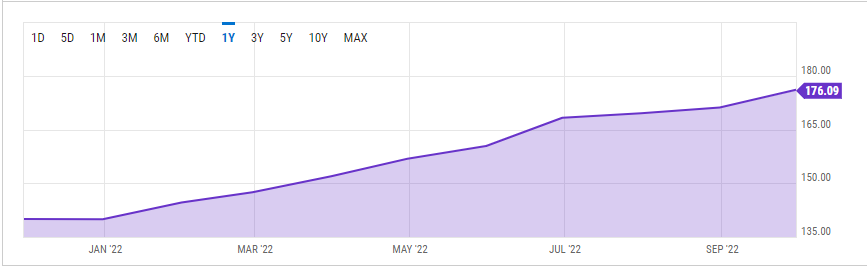
    This is illustrated clearly by the rise in newsprint costs, newsprint is the paper newspapers are printed on. These figures are from the USA and the rise in the UK has been even higher.

    Newsprint costs have increased greatly since the start of the year.

    The industry has responded by reducing pagination, the number of pages in a newspaper. Fewer pages require less content. Cover prices have, in some cases, increased.

    Companies have put a freeze on recruitment with staff who leave not necessarily being replaced.

    As the cost-of-living crisis deepens companies are cutting back on their advertising spending providing a secondary blow to an industry already facing an uncertain future. This impact is felt disproportionately on local news titles as much of their advertising revenues come from smaller local businesses.

    Very few local news services have successfully developed sustainable digital models, converting the daily doorstep delivery into a digital subscription. Instead, they have relied on generating revenues from online and programmatic advertising.

    These models generate revenues based on the number of page views; journalists are incentivised with monthly page view targets. A certain number is expected and if the target is exceeded bonuses can be triggered.

    It is unfair to expect journalists to be motivated by page view targets, quality not quantity should be the aim of any good news outlet.

    Reports on Senedd committees are important for us to understand the efficiency and impact of the work of our legislators, but they don’t generate page views, whereas the contents of “Celebrations” tubs this Christmas do.

    Over the coming months and years, we will see less actual news and more content designed to generate page views, this is the commercial reality for news companies during a deepening economic crisis.

    So how do we develop a sustainable news business that is all about quality? Reporting on issues that matter? Ignoring the bile generated towards Wales from a predominantly right-wing UK media?

    It’s simple. It’s down to you.

    We’re developing a sustainable business model made up of a range of revenue streams.

    We’ve set up Talking Wales as a Community Benefit Society which is a form of cooperative, this will allow you to own a stake in the business, and we will be releasing details of our initial pioneer share issue very soon.

    Being owned by the community we serve will ensure we stay true to our core values, reporting objectively without fear or favour, based entirely on fact and reporting everything from an unashamedly Welsh perspective.

    The key component that will ensure a long-term sustainable future is subscriptions. Subscriptions will allow people to invest in the service monthly or annually in return for a certain level of exclusive content. More importantly, knowing that that subscription enables Talking Wales to employ the staff required to deliver a quality service focussed on keeping Welsh citizens informed.

    Without you, as subscribers, we won’t be able to generate Welsh news in the range of formats, distributed across a growing number of platforms, reaching as many people as possible. Creating a community of informed citizens.

    With your support we can create the Welsh media service Wales deserves and so desperately needs.

    Diolch

    Huw

    Huw Marshall

    Founder, Talking Wales.