news

  • Why we’ve deleted our x

    Why we've deleted our X

    By Kaiesha Page

    Talking Wales is leaving X because we no longer believe it is a platform for healthy political discourse.

    Talking Wales has made the decision to leave X, formerly Twitter, after concluding that the platform no longer supports responsible, constructive political debate. This decision follows sustained concerns about moderation, platform governance, and the deployment of artificial intelligence tools without adequate safeguards.

    There was a time when X — formerly Twitter — sat at the very centre of the political ecosystem. For years, it acted as a primary source of news, commentary and real-time debate, connecting allies and opponents alike in ways that had never before existed in the digital world.

    It was also where I first stepped into politics myself. I joined in the platform’s early days bright-eyed, eager and full of optimism. Back then, X was genuinely eye-opening — exposing me to political ideas, movements and schools of thought I may never otherwise have encountered.

    Debate existed, but it was largely constructive. Discourse was possible without voices being drowned out or deliberately silenced.

    That all changed in 2022, when Elon Musk purchased the platform for $44 billion. What followed was not simply a rebrand, but a fundamental shift in how X operates — and in the type of discourse it now rewards.

    Changes to moderation, the amplification of provocative content, and an increasingly adversarial culture have reshaped the platform into something markedly different from what it once was.

    Where debate had previously been challenging but constructive, it has increasingly become hostile, polarised and performative.

    "This was not simply a rebrand, but a fundamental shift in how X operates — and in the type of discourse it now rewards."

    This shift alone is deeply concerning. But when viewed alongside recent stories involving Musk’s latest venture, Grok, it became clear that remaining on the platform was no longer compatible with our values.

    This shift is concerning in itself. But recent reporting on the misuse of Grok — including its use to digitally undress and sexualise women — marked a clear line for us.

    What is Grok?

    Grok is an artificial intelligence chatbot and image generator developed by xAI, the company founded by Elon Musk. It is embedded within X and positioned as an alternative to other large AI models, marketed as more irreverent, less constrained and more willing to engage with controversial topics.

    The lack of meaningful constraints is a consistent theme throughout Musk’s politics.

    While some critics have gone as far as to label Musk a “Nazi” — particularly following a widely shared hand gesture after Donald Trump’s election victory — the more relevant concern lies elsewhere.

    What is evident is a growing alignment with fascistic tendencies — hostility towards regulation, contempt for institutional oversight, the concentration of power in private hands, and a recurring portrayal of dissent as illegitimate censorship.

    When such tendencies are paired with ownership of a major communications platform — and the deployment of loosely constrained artificial intelligence tools — the implications extend far beyond personal ideology.

    They shape whose voices are amplified, whose safety is compromised, and whose humanity is treated as collateral damage in the pursuit of “free speech”.

    If these values shape the platform itself, it is reasonable to ask why we would expect his AI to operate any differently.

    The most recent controversy centres on freelance journalist and commentator Samantha Smith. In an article for the BBC, she described feeling “dehumanised and reduced to a stereotype” after Grok was used to digitally remove her clothing from a fully clothed image of her.

    After sharing her experience on X, Smith was met with a wave of responses from other women who reported having experienced similar forms of AI-generated sexual abuse — underscoring that her case was not isolated, but part of a wider and deeply troubling pattern.

    Another instance saw a 14-year-old actress have her image digitally nudified.

    Against this backdrop, the British government has announced plans to criminalise the use of so-called “nudification” tools.

    These measures were confirmed in the long-awaited Violence Against Women and Girls Strategy, published in December 2025 after multiple delays.

    The strategy outlines a range of actions the UK government intends to take in response to technology-facilitated abuse, including AI-generated sexual exploitation.

    Talking Wales has explored this strategy in greater detail in a recent podcast episode, including specific implications for Wales and how these measures may be implemented at a devolved level.

    Legal experts have been clear that this harm is neither inevitable nor unavoidable.

    Clare McGlynn, a law professor at Durham University, told the BBC that X or Grok “could prevent these forms of abuse if they wanted to”, adding that they “appear to enjoy impunity”.

    "The platform has been allowing the creation and distribution of these images for months without taking any action, and we have yet to see any challenge by regulators."

    This assessment is particularly striking given that xAI’s own acceptable use policy explicitly prohibits “depicting likenesses of persons in a pornographic manner”.

    The issue, then, is not the absence of rules, but the apparent lack of will to enforce them.

    In response to the BBC’s reporting, Grok’s media team was contacted for comment.

    At the time of publication, no direct response had been provided. Instead, the BBC reported receiving an automated reply stating simply: “legacy media lies”.

    If concerns over the misuse of AI are not taken seriously — even when they involve non-consensual sexual abuse — it surely begs the question: is AI safe in Musk’s hands?

    Based on the evidence, the answer is increasingly clear.

    When artificial intelligence is deployed without effective safeguards, meaningful oversight or a willingness to intervene when harm occurs, it cannot be considered safe.

    That risk is magnified when responsibility is concentrated in the hands of individuals and organisations that repeatedly resist regulation, dismiss criticism and frame accountability as censorship.

    For Talking Wales, this leaves little room for ambiguity.

    Political discourse relies on trust — trust that platforms will act responsibly, protect users from harm and take concerns seriously when those protections fail.

    X no longer meets that standard.

    Our decision to leave the platform is not about disengaging from debate or avoiding challenge.

    It is about refusing to legitimise an environment where harm is normalised, safeguards are inconsistently enforced, and serious concerns — particularly those affecting women and children — are met with indifference or hostility.

    We remain committed to robust political discussion, scrutiny and accountability.

    But we will pursue that work in spaces that align with our values, respect consent, and recognise that technology deployed at scale carries real-world consequences.

  • Exploring Poverty in Caerau (Llynfi Valley)

    This week, we published a piece on Caerau in the Llynfi Valley, which is one of several South Wales valleys communities that feature in the top 10 of the Welsh Index of Multiple Deprivation. We spoke to some of the people living in and supporting the community. Here’s a taster. You can view the video in full with subtitles by following the YouTube link below.

    Watch the video in full here:

    A huge thank you to Graham Dawe and Zoee Smith from the Caerau Development Trust.

  • Our news is broken

    And we have a plan to fix it.

    I’m back from a two-week family holiday in France, and it was also a partial two-week break from the news. As a desk-based news junkie, I’m constantly consuming news via radio and online, so restricting my news diet gave me a new perspective on how ordinary people consume news.

    August is generally a quiet news month, with the doors of the Senedd and Westminster closed until September. Proof of which was me bumping into the shadow Home Secretary James Cleverley on an evening stroll around La Flotte harbour. 

    Without the usual parliamentary chatter, news providers become more reliant on generating actual news. So, what did I hear and see?

    Immigration, immigration, the war in Ukraine, Gaza, Trump and immigration.

    If an alien landed on Earth today, it would be a huge news story, not just because it would prove the existence of extraterrestrial life, as a literal alien, it would face the wrath of the UK and US public, who apparently see immigration as an increasing problem.

    Immigration is constantly framed as a problem, not just by the usual suspects on the right, but also, more concerningly, the BBC.

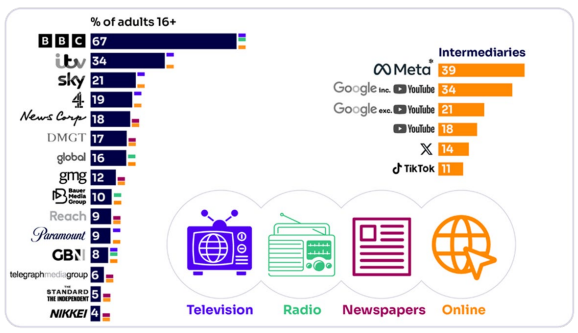
    The BBC remains, by far, the most influential news outlet in the UK, as confirmed by Ofcom’s annual research into news consumption habits.

    Much of the news about immigration I accessed over the last two weeks focused on the Epping “asylum” hotel and the ensuing protests. Much of the BBC’s output involves reporting on events that have occurred; however, reporting without sufficient context can skew people’s perspectives on real life. On Saturday, the BBC were reporting on predicted trouble at anti-immigration protests being held across the UK, and their online coverage of Lucy Connolly’s interview in the Telegraph drew a great deal of ire from commentators. Connolly pleaded guilty to inciting racial hatred after calling on people to set fire to hotels housing immigrants on X following the tragic murder of three young girls in Southport, which had been falsely attributed to an asylum seeker who had arrived by small boat. In the Telegraph piece, she claimed to have been a “political prisoner”.

    The BBC do share content that attempts to provide context and balance in their coverage, but in the two examples shown above, “How many people cross the Channel in small boats?” and “Migration: How many people come to work and study in the UK?” they fail to convey relevant information in an easy to understand and accessible manner.

    The fact that immigration is primarily framed as a problem or issue has clearly impacted the public’s views. In the past two weeks, research by YouGov has revealed that 47% of the UK public believe that immigration is primarily illegal, despite the actual statistics showing that not to be the case, and by some margin. Approximately 77% of non-EU immigrants came to the UK to study, while around 20% sought asylum or arrived on humanitarian grounds. This percentage has increased despite the numbers remaining relatively steady; the increase is due to a decline in the number of people coming here to work and study.

    According to the August 2025 Ipsos Issues Index, a staggering 48% of the population sees immigration as the biggest issue of the day 15% ahead of the economy, and 26% ahead of the NHS. 31% of respondents feel that their local area is housing more than its fair share of asylum seekers; this figure doubles to 61% when those who voted Reform at the last election are questioned.

    Granted, these are national polls, and little research has been conducted at a Wales level, but is the constant reporting on immigration and its framing as a problem having an impact here?

    Reform is riding high in the polls in Wales and, alongside Plaid Cymru, has been leading in the political popularity contest. With a policy platform built primarily on eliminating immigration, blaming it for the pressures on public services and housing, how does this stack up in Wales?

    There are a few byelections on the horizon in Wales. In the Vale of Glamorgan, there are two: a town council election in Cowbridge and a County Council election in Barry. In Caerffili a Senedd byelection is to be contested following the untimely death of Dr Hefin David, at the age of 47, the Labour MS for the constituency.

    The Vale of Glamorgan is home to approximately 132,000 residents, of these seventeen, yes 17 – SEVENTEEN – are asylum seekers being housed by the local authority. The impact these seventeen individuals have on local services and housing availability is statistically negligible.

    The situation in Caerffili is similar, with 176,000 residents, seventy-seven are asylum seekers being housed by the local authority. Caerffili is one of the few Welsh boroughs that have seen its population fall during the previous decade. In 2011, it had 178,000 residents, so any issue with housing availability there certainly has nothing to do with immigration.

    Around 20% of staff in the UK’s health and social care sector have come from overseas; without these individuals, the health and social care sectors in Wales could well collapse.

    How immigration is reported is essential; without having all the facts, how can Welsh citizens be expected to make informed decisions at the ballot box?

    There’s a genuine need to change how news is delivered today. There is a need not only to inform but to educate, a need to distribute news and information in accessible formats across as wide a range of platforms as possible.

    There’s also a need to change how news companies are run, prioritising transparency and honesty over profit.

    That’s why Talking Wales exists, a cooperatively owned public interest news service for Wales, operating across radio, YouTube, social media, email newsletters, in-person events, print and the internet.

    We’re currently working on a series of pieces examining two of the most deprived council wards in Wales, according to the Welsh Index of Multiple Deprivation. Caerau, located above Maesteg and Tylorstown in the Rhondda Cynon Taf area, is another of these wards. Both were in the top five of the 2019 WIMD, and both are 98% White, of Welsh/British descent.

    We’ll be speaking to residents, community leaders and those working to support both communities to find out why these places have been left behind and what can be done to improve their communities and individual prospects.

    We’re seeking the absolute truth about why people are unable to access public services, find adequate housing, and secure employment opportunities. We will be sharing our findings in a range of formats across multiple platforms.

    If you’d like to learn more about Talking Wales and get involved, visit https://talking.wales

    Diolch

    Huw Marshall

    Founder – Talking Wales

  • UK Audiences Shift to Video, Social Media, and AI Amid News Fatigue

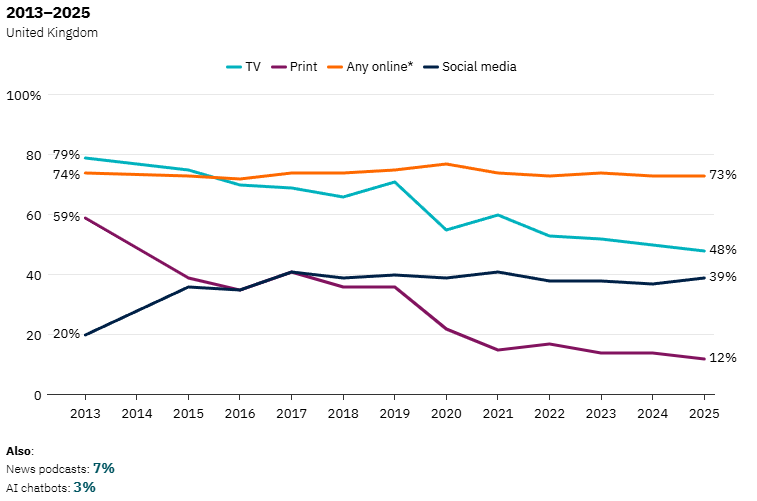
    The Reuters Institute Digital News Report 2025, published today, reveals a landmark shift in the UK media landscape, as consumers turn increasingly towards video platforms, social media, and AI-driven tools, while traditional outlets continue to decline. The report, based on a YouGov survey with over 92,000 respondents across 46 countries, highlights significant transformations in news consumption habits, trust levels, and emerging digital dynamics.

    Traditional Media in Decline

    Across the UK, engagement with traditional news formats, such as television, print, and legacy news websites, continues its steady slide. Viewership of TV news and readership of print newspapers have reached record lows. Audiences are increasingly migrating to short-form video and social platforms, driven by younger demographics favouring new formats.

    Rise of Social and Video Platforms

    Short video formats on platforms like YouTube, Facebook, Instagram and TikTok are reshaping how audiences, especially millennials and Gen Z, interact with news. Social media recently overtook television as the primary news source in the US. While UK-specific data mirrors this global trend, younger viewers increasingly engage through influencers and video clips rather than formal news programming.

    (Image from Reuters Institute for the Study of Journalism: Digital News Report 2025)

    Emerging Role of AI

    A notable 12% of UK users under 35 and 7% overall now use AI chatbots like ChatGPT, Google Gemini, or Meta AI to obtain news. Users appreciate their real-time capability but express significant concerns about accuracy and lack of transparency, a vital issue for public trust.

    Trust and News Avoidance

    Public trust in news stabilises at around 40% in many markets, including the UK, while news avoidance remains high. Nearly half of British adults regularly skip news due to negativity, overload, or distrust.

    Newsrooms are responding with innovations like “ethics boxes”, bite-sized explainers, and more constructive journalism to engage disengaged audiences.

    Podcasting Gains Traction

    Podcasts remain influential, with 7% of respondents referencing podcasts as a news source. They offer in-depth commentary and storytelling. In the UK, their influence complements written and broadcast news, with digital audio formats holding firm as trusted sources.

    Platform Polarisation and Misinformation Risks

    The report highlights a global shift in platform biases, such as more right‑leaning audiences flocking to X after Musk’s acquisition in the US. While the UK case is less polarised, the proliferation of professional and amateur influencers raises concerns around misinformation, requiring stronger content oversight.

    Industry Response and Strategy

    UK publishers are innovating to counteract declining engagement and growing fatigue. From structured storytelling to explainer series and newsletters, they aim to retain audiences through variety and verifiable journalism. AI is being cautiously trialled to personalise content, though trust in its use remains tepid, with only 13% supporting the BBC’s AI content tailoring initiative.

    Outlook

    The Digital News Report 2025 portrays a UK media landscape in transition. Traditional news organisations must innovate or risk irrelevance as consumer habits evolve, caused by social video, AI tools, and content fatigue. For publishers and regulators alike, the path forward demands adaptation through credible, engaging, and transparent content strategies to regain public trust and engagement.

    For Wales, it highlights the need for greater innovation and increased independent public interest news provision.

  • Rail Funding for Wales Falls Short as Longstanding Inequity Persists, Critics Say

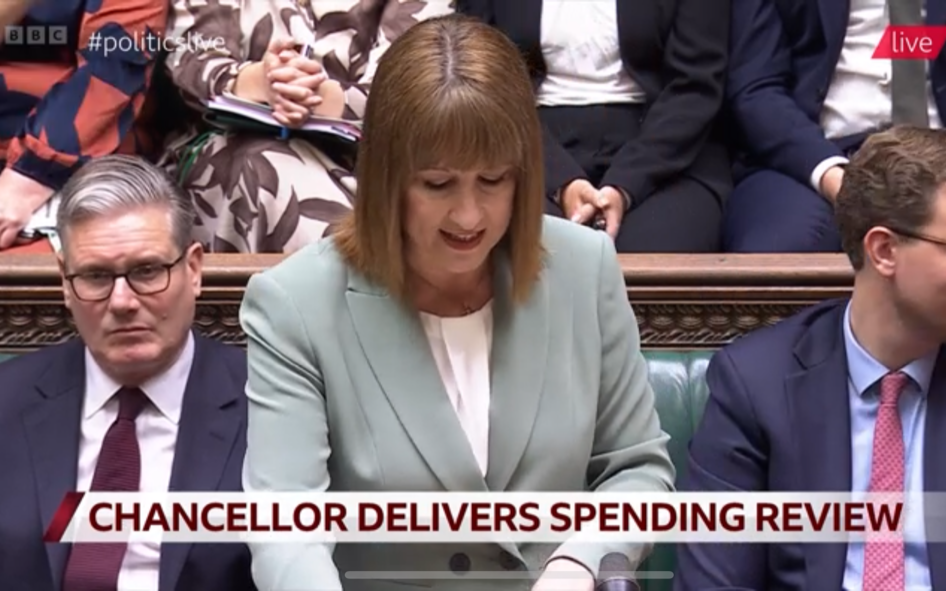
    The UK Chancellor’s Spending Review has allocated £445 million to Welsh railways over a ten-year period. However, politicians and analysts across Wales have quickly criticised this move, calling it inadequate and long overdue.

    Chancellor Rachel Reeves’s announcement was initially promoted as a significant boost for Welsh rail infrastructure, with claims that the package surpassed what Wales would have received under the Barnett formula if HS2 had been funded. However, a closer examination reveals that only £48 million will be allocated for enhancements on the devolved Core Valley Lines within the next four years. Critics argue that spreading the remaining funds over a decade significantly reduces their value in real terms.

    According to the Wales Governance Centre figures, labelling HS2 as an “England and Wales” project has deprived Wales of approximately £845 million in consequential funding between 2016 and 2030. This amount far exceeds the new rail investment and highlights a funding mechanism that continues disadvantaging Welsh infrastructure projects.

    While the Spending Review mentions the Borderlands Line and the Cardiff–Bristol route, it provides little detail regarding transparency and delivery timelines. Although the Treasury insists that most of the £445 million will be spent over ten years, scepticism remains high.

    Welsh Conservative Senedd leader Darren Millar called the investment “shameful” and “an insult to the people of Wales.” Meanwhile, Plaid Cymru’s Heledd Fychan accused the Welsh Labour government of settling for too little. “Public services, already on the brink in Wales under Labour, face further cuts because the First Minister asked for very little and received exactly that,” she said.

    The Spending Review does, however, increase the Welsh Government’s overall annual budget to an average of £22.4 billion over the next three years. This includes a real-terms increase in NHS spending, reflecting a 3% rise in day-to-day health budgets in England. However, with healthcare already consuming half of the Welsh budget, experts warn that other services may suffer.

    The Institute for Fiscal Studies (IFS) estimates that while public service funding will grow by 1.2% above inflation, increased demands from the NHS could consume most of this rise. “That will likely require tough choices and real-term cuts for some services,” said David Phillips from the IFS.

    First Minister Eluned Morgan attempted to frame the settlement more positively, highlighting investments in coal tip safety and community benefits. “Wales will see significant extra investment in rail infrastructure and communities,” she said.

    Nevertheless, the consensus among critics is clear. Despite the headline-grabbing figure, the £445 million rail package falls far short of addressing systemic funding inequalities, especially considering the exclusion of Wales from HS2 funding. With growing calls for a fairer fiscal framework, today’s announcement may be remembered more for what it fails to deliver than for what it promises than what it promises.

  • Local news crisis: help us regenerate independent local news 

    Big tech greed, corporate takeovers and declining advertising revenues mean that Britain’s independent local news providers are facing a tough battle to get trustworthy information into the hands of communities. 

    Misinformation is on the rise. In the hardest-hit areas, disinformation is stoking up tension and riots are breaking out. Networks are being manipulated. Convincing, AI-generated deepfakes are fooling even the most sceptical users.  

    People need reliable information and shared understandings to participate meaningfully in their community. And yet, the local news crisis in the UK has left over 4 million Brits living in news deserts – areas that are entirely without quality local journalism.  

    No news is bad news. Something needs to change.  

    Local people deserve reliable information that speaks to them, for them and with them. They need news providers that live in their communities and walk alongside them, that speak truth to power, celebrate local heroes and shine a light on local issues. 

    Across the country, a dedicated movement of independent journalists is holding power to account, strengthening pride in place and supporting people to take part in their communities. 

    But more than ever, local news outlets need our support. They are fighting to keep local news alive. 

    We need politicians to step up to the challenge of regenerating local news, so that indie news providers can continue getting information to the people who need it most for generations to come. 

    We ASPIRE for better news: local news that is Accountable, Sustainable, in the Public interest, Innovative, Representative and Engaging (‘ASPIRE’). 

    That’s why the Local News commission, supported by the Public Interest News Foundation, has come up with a plan to solve the local news crisis by 2035, by calling on the government to support six recommendations: 

    1. A Local News Stimulation Fund of £15m for the next 10 years to help local news make the digital transition. 
    2. Incentives for philanthropists, big tech and members of the public to support local news. 
    3. A workforce plan to ensure that journalists are drawn from all backgrounds and equipped to serve their communities. 
    4. A fair deal for local news providers using the new Digital Markets, Competition and Consumers Act to level the playing field with big tech 
    5. A new deal between local government and local news in which local communities are informed and empowered 
    6. A new relationship between the BBC and local news at Charter Renewal in 2027 building on the Local Democracy Reporting Service. 

    Sign the Public Interest News Foundation’s petition to call on the government to ensure a bright future for local news for generations to come: https://chng.it/tzx2J5qDXW  

    About the Public Interest News Foundation (PINF) 

    PINF is the UK’s first and only charity helping indie news thrive. PINF’s advocacy and research is shaped by our network of over 100 local, independent, public interest news providers from all corners of the UK: from Devon to Shetland, Newry to Caerphilly. As an independent charity, PINF is not dependent on the government or the legacy news industry for support. We are funded by generous individual donors, companies, trusts and foundations, giving us the freedom to form our own vision of the future. 

    QR code 

  • Indie News Week 2025: “No News is Bad News”

    Huw Marshall, Founder Talking Wales

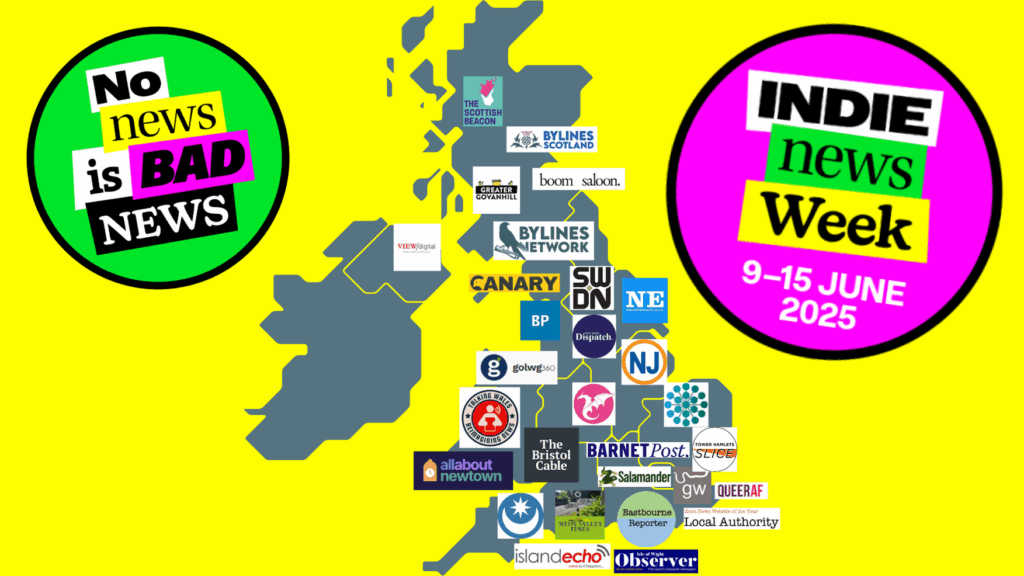
    The second annual Indie News Week starts today, Monday, June 9th, and runs until Saturday, June 15th, 2025. Dedicated to celebrating and supporting the UK’s independent news sector, it was launched by the Public Interest News Foundation (PINF) in 2024. The initiative highlights the vital role that local community-led outlets play in sustaining democracy, fostering public engagement, and filling critical information gaps left by declining mainstream media.

    Why does Indie News Week Matter?
    Local news is facing dramatic challenges. We have written extensively about the challenges facing public interest news in Wales and further afield, from the rise of digital platforms absorbing advertising revenue to corporate consolidation and closures of local news outlets. Under the banner “No News is Bad News,” Indie News Week aims to raise awareness, foster community interaction, and amplify fundraising efforts for indie newsrooms.

    Stronger Together
    Collaboration is at the heart of this year’s events. For instance, South West Durham News and The Northern Eco will share a newsroom during Indie News Week, hosting podcasts, open doors, guided nature walks and market stalls.

    These activities offer the public an insider view of journalism—how stories are crafted, verified, and published.


    The Bylines Network are hosting a panel discussion focused on equality and diversity in indie media. Funded through coordinated community journalism, Bylines highlights how underrepresented voices can reshape newsrooms and challenge mainstream media narratives.

    Across the UK
    From Shetland to Eastbourne, Belfast to Bethesda, over 30 independent outlets will host local events, from quizzes and symposiums to online meet‑ups.

    The Public Interest News Foundation’s director, Jonathan Heawood, told Hold the Front Page: “Communities deserve healthy news ecosystems that facilitate the free flow of information, speak truth to power and shine a light on important issues.”

    More Than a Week
    Indie News Week isn’t just a celebration; it’s about advocacy. The Public Interest News Foundation has launched a petition urging the UK Government to support local news infrastructure, backing Culture Secretary Lisa Nandy’s pledge for reliable news services in every town and village.


    Importantly, the week also builds capacity. Outlets report increased confidence and skills after participating: better fundraising, community engagement, and collaboration that fortify their resilience against systemic challenges.

    Looking Ahead
    Indie News Week underscores just how much is at stake when community media thrives or dies. Successful initiatives show that indie outlets can flourish with public backing through donations, subscriptions, crowdfunding, and accessible local engagement. As the sector evolves, the campaign aims to sustain and scale support.

    Talking Wales has launched a new website as part of Indie News Week, and is starting conversations around critical issues such as immigration, the Senedd elections in May 2026 and news provision in Wales as we develop our new service.

     
    Indie News Week is a great starting point if you’d like to support Talking Wales. Less news means less community; as the campaign reminds us, no news is bad news.

  • Public Interest News in an Ideal World

    Home » News » Public Interest News in an Ideal World

    A plan for Wales

    I regularly write about the challenges public interest news faces in Wales and further afield, mainly due to legacy news publishers’ failing business models.

    There is a general consensus on the importance of public interest news, that is, news that informs the public regarding matters that impact their daily lives. It helps people make sense of the world they live in, tells them about the actions and activities of local and national governments and done well explains why the cost of a tin of baked beans has increased in the past 12 months, why getting a doctor’s appointment can be a challenge and why accessing affordable housing is becoming increasingly difficult.

    So, what would the perfect public interest news service look like?

    Accessibility:

    Accessibility refers to the availability of information across various platforms, including online, YouTube, social media, and radio, in a range of formats, including audio, video, text, and print. It also relates to how news and information are presented to the public; it must be easy to understand, trustworthy and relatable considering the intended audience.

    To be fully accessible, it needs to be free to access.

    Value:

    Public interest news plays a crucial role in society by providing information that is essential for the well-being and functioning of communities. This can be summed up in five ways.

    An Informed Citizenry: It helps people stay informed about important issues, enabling them to make educated decisions, particularly in democratic processes like voting.

    Accountability: Public interest journalism holds those in power accountable by investigating and exposing corruption, misconduct, and other issues that may otherwise go unnoticed.

    Transparency: It promotes transparency by shedding light on government actions, corporate practices, and other activities that affect the public.

    Community Engagement: By covering local issues and events, public interest news fosters a sense of community and encourages civic engagement.

    Public Good: It serves as a public good by providing information that benefits society as a whole, even if not everyone directly consumes it.

    Its societal value is clear; getting the public to value it is a different matter.

    As a society, we contribute to the cost of services through taxation, which provides our health and education services, keeps our roads in working condition, and keeps our streets free, where possible, of crime. This overview is slightly simplistic, but I’m sure you get the gist. For a society to function correctly, we must fund it.

    We know that accessibility to impartial and factual information is a cornerstone of a healthy democracy.

    Only 8% of the UK public currently pay for news, slightly lower than the 16% in the USA and substantially lower than the 40% in Norway.

    There could be several factors at play here. Much of the news in the UK is free to access, funded through advertising or, in the case of the BBC, via the licence fee, which some would say is a form of tax. The quality of the news may well affect people’s perception of value. Some consumers may not see enough value in paid news subscriptions, especially when they can access similar information for free. The perceived value of exclusive content versus commoditised news can influence their willingness to pay.

    The war in Ukraine and the cost-of-living crisis have affected people’s willingness to fund news. When drawing up a list of financial priorities, a news subscription is an obvious target for the chop.

    So, what’s the answer?

    We build a community that cares about Wales and its future, values democracy, and wants Welsh citizens and the global Welsh diaspora to have access to information that helps them engage in democratic processes, giving them agency from an informed and educated perspective.

    A community that’s invested in the numerous societal benefits a Welsh public interest news would deliver.

    We need to take a new approach to creating and delivering news, and a new business model is required to fund that service.

    The Service:

    A new approach to delivering news with innovation at its heart. A new public square discussing the issues that matter to people. We won’t follow the news agenda; we’ll create our own daily agenda.

    Giving Wales a voice through a daily national conversation on Wales’ first dedicated talk/news digital radio station. Listening to people in Wales, exploring and challenging the issues they care about, and getting answers to the questions they want to be answered.

    Making sense of Wales, how it functions, and how Welsh citizens can contribute to the democratic process. Sharing information in relatable and accessible formats via a dedicated website, social media channels, LinkedIn, WhatsApp, and YouTube.

    Regular newsletters delivered straight to your inbox—podcasts on various topics, including Welsh politics, culture and history.

    We’ll host virtual and in-person events where our community can meet, hear from and question policymakers and experts and discuss Wales.

    The Business Model:

    How we fund a Welsh public interest news service is critical to its long-term success. That’s why Talking Wales will be community-owned. A community that shares a desire to ensure every Welsh citizen has access to the news and information that allows them to understand the Wales they live in and take informed decisions at the ballot box.

    A community that values the contribution of accessible public interest news and its potential benefits to Welsh society.

    An annual membership, payable monthly or annually, will fund our day-to-day operations and pay staff costs. This membership will also provide voting rights at the Annual General Meeting and access to exclusive content and events.

    Talking Wales will issue community shares. These shares do not increase in value but attract a modest level of interest. After a specific time period, they can be sold back to Talking Wales when it is in a financial position to repurchase them. The door will be open to institutional impact investors, businesses, and organisations that wish to include ethical and impactful investments in their investment portfolios.

    This will give Talking Wales the required capital to grow annual revenues.

    Our target is to achieve a membership of 10,000 individuals who care passionately about democracy and are invested in ensuring Welsh citizens have access to the objective, independent news and information they need and deserve.