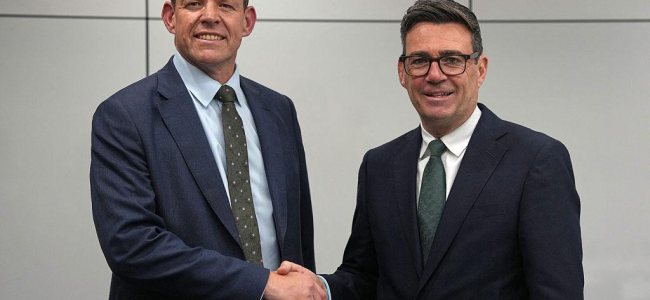

First Minister Rhun ap Iorwerth has secured an agreement to begin further discussions with the UK Government on economic development and devolution following talks with Prime Minister Andy Burnham in Glasgow today. However, there has been no confirmed agreement on the transfer of policing and justice powers, the disputed £14 billion railway investment commitment or the Welsh Government’s proposed child poverty payment.
The meeting marked the first National Economic Council gathering dedicated to the UK’s devolved nations under Prime Minister Andy Burnham.
It brought together the Welsh and Scottish First Ministers, UK ministers and representatives of the Northern Ireland administration to discuss economic growth, industrial investment and the future distribution of powers within the United Kingdom.
Following a separate meeting between the Prime Minister and Rhun ap Iorwerth, Downing Street confirmed that officials would begin a joint policy development process, led by No10 North, examining regional empowerment, reindustrialisation and economic growth.
The next National Economic Council meeting will take place in Cardiff in spring 2027.
What has actually been agreed?
Downing Street’s statement confirms a process of further discussions rather than an immediate transfer of powers or a new financial settlement.
The process, described as a policy sprint, will involve officials from the UK and devolved governments exploring how each administration could contribute to economic development.
The Prime Minister has suggested that greater local control over innovation funding and employment support could help stimulate growth, particularly in communities affected by industrial decline.
Speaking after the meeting, Burnham confirmed that the UK Government would consider further devolution of employment support to Wales and Scotland, with particular attention to helping young people into work.
This represents a potential area of policy change, although no timetable, funding allocation or formal transfer of responsibility has been announced.
Borrowing powers: First Minister reports encouraging progress
One of the most significant developments concerns Wales’s ability to borrow money and manage its public finances.
Following the meeting, Rhun ap Iorwerth said there had been encouraging agreement that the fiscal and borrowing arrangements placing Wales at a disadvantage compared with other UK nations needed urgent revision.
He welcomed what he described as the Prime Minister’s position that reform was now a question of how and when it would happen.
This is potentially important because the Welsh Government has argued that its existing borrowing limits restrict its ability to invest in major infrastructure and respond to financial pressures.
However, Downing Street’s official account does not explicitly confirm an agreement to increase Welsh borrowing limits. The First Minister’s interpretation therefore represents reported progress in negotiations, not a completed financial reform.
A disagreement over what devolution should mean
The meeting also exposed a significant difference in emphasis between the two governments.
Rhun ap Iorwerth wants Wales to receive powers comparable to those already exercised by Scotland, potentially through a new Wales Bill.
His priorities include devolving policing and justice, alongside greater financial autonomy.
The Prime Minister, meanwhile, has emphasised transferring decision-making beyond national governments to regions, cities and local communities.
Burnham argues that his experience as Mayor of Greater Manchester demonstrated how locally controlled economic policy could support industrial development and employment.
In his opening remarks, he acknowledged that the devolved governments should determine the structure of further devolution within their nations.
The First Minister reiterated after the meeting that decisions about further devolution within Wales should rest with the Senedd.
The distinction matters because transferring powers from Westminster to Cardiff is constitutionally different from transferring responsibilities from Cardiff to local or regional bodies.
Neither approach necessarily excludes the other, but the governments have different priorities concerning where additional powers should initially reside.
Rail funding: £14 billion commitment remains unresolved
The First Minister again pressed the UK Government to deliver its £14 billion long-term commitment to Welsh rail infrastructure.
Rail investment has become a major point of disagreement following this week’s UK Budget.
The Welsh Government argues that the funding allocated within the current spending period falls substantially short of what is required to accelerate planned improvements.
After the Glasgow meeting, Rhun ap Iorwerth said the Prime Minister had personally committed to examining the £14 billion pledge.
That is a commitment to review the issue, rather than an announcement of additional funding.
The question remains whether the UK Government will bring forward substantial investment, and which railway schemes would receive priority.
Cynnal: child poverty payment still awaiting agreement
Another outstanding issue is the Welsh Government’s proposed Cynnal weekly child payment pilot.
The policy is intended to provide additional financial support to some of the poorest families in Wales.
However, the Welsh Government wants assurances that payments will not create adverse tax consequences for recipients, potentially undermining the intended financial benefit.
The First Minister raised the issue directly with the Prime Minister and called for urgent Treasury action.
No final agreement on the tax treatment or implementation of Cynnal was confirmed in Downing Street’s statement following the meeting.
The pilot’s eventual value, eligibility criteria and start date will be important in assessing its likely impact on child poverty.
European relations also discussed
The First Minister also raised the UK’s future relationship with the European Union.
He said he supported closer UK–EU cooperation and urged the Prime Minister to pursue rejoining the single market and customs union.
This is a policy position advocated by the Welsh First Minister, not an agreed change in UK Government policy.
For Wales, closer trading arrangements could have implications for manufacturing, agriculture, food exports and businesses with European supply chains.
What happens next?
Outcome of the Glasgow meeting
| Joint economic policy discussions | Agreed |
| Cardiff NEC meeting, spring 2027 | Confirmed |
| Further employment support devolution | Under consideration |
| Additional Welsh borrowing powers | Encouraging talks; not agreed |
| £14bn rail commitment | Further examination promised |
| Justice and policing devolution | No agreement announced |
| Cynnal child payment | Awaiting Treasury resolution |
The Glasgow meeting has established a process for further cooperation between the Welsh and UK governments, with economic development and additional devolution now subjects of formal discussion.
For Wales, the significance will depend on whether those discussions produce legislative changes, greater financial flexibility and identifiable investment.
The immediate accountability questions concern the timetable for reviewing borrowing powers, the future of the £14 billion rail commitment and whether Cynnal can proceed without reducing the financial support received by participating families.