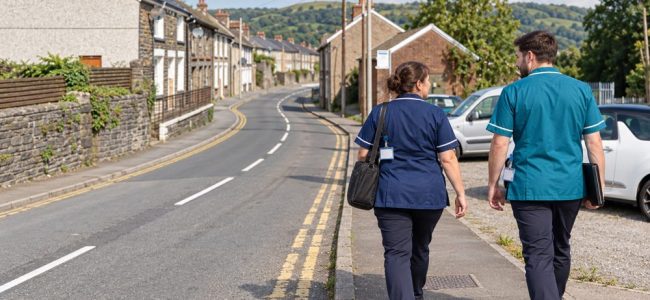

Health boards in Wales are being asked to prepare for a gradual shift in NHS spending towards GP services, community healthcare and preventative treatment, as ministers seek to reduce pressure on hospitals and develop a more sustainable health service.
The Welsh Government has confirmed that health boards are developing plans to increase the proportion of their expenditure directed towards primary and community care by 0.5 percentage points each year from 2027–28.
The commitment forms part of a wider programme of NHS reform, including a new workforce strategy and proposals to deliver more care closer to people’s homes.
The Government believes that changing how services are organised could help prevent illness, improve support for people with long-term health conditions and reduce avoidable demand on hospital services.
However, the proposals raise important questions about NHS funding, staffing and whether community services have sufficient capacity to take on additional responsibilities.
What is changing?
The Welsh Government wants to change the balance of NHS spending so that a greater proportion supports primary and community healthcare.
Primary care includes services such as general practice, while community care includes a range of nursing, therapy and other health services delivered outside hospitals.
Under the Government’s plans, health boards will increase the proportion of spending directed towards these services by 0.5 percentage points annually from the 2027–28 financial year.
This is a change in the share of NHS expenditure rather than a commitment to increase the overall health budget by 0.5%.
For example, a health board with an annual budget of £1 billion would need to allocate an additional £5 million to primary and community care to increase its spending share by half a percentage point, assuming its overall budget remained unchanged.
That is an illustrative calculation. The actual sums will depend on individual health-board budgets, existing expenditure and future funding settlements.
The Government has not yet published a complete breakdown of how the change will affect every health board.
Why does the Government want to change the system?
Much of the NHS is organised around hospitals, where treatment can be expensive and services are frequently under pressure.
However, many health conditions can be managed more effectively through early intervention, regular monitoring and support delivered closer to home.
The Welsh Government argues that a stronger community healthcare system could help people remain independent, manage long-term conditions and avoid unnecessary hospital admissions.
The approach could be particularly important in Wales, where an ageing population and high levels of chronic illness create continuing demand for health and care services.
The Government’s ambition is to make prevention and early intervention more central to the NHS.
That would require closer working between GPs, community nurses, pharmacists, therapists, hospital teams and other professionals.
What would this mean for patients?
For patients, the intended benefits include easier access to appropriate care and less reliance on hospital appointments.
People with long-term conditions might receive more regular monitoring and support from community teams.
Some services currently delivered in hospitals could potentially be provided in local health centres, clinics or patients’ homes.
Better coordination between healthcare professionals could also reduce duplication and help patients avoid repeatedly explaining their circumstances to different services.
However, these are intended outcomes rather than improvements already delivered.
Whether patients experience better services will depend on staffing, investment, local facilities and the way health boards implement the reforms.
There is also a risk that shifting responsibilities from hospitals without expanding community capacity could increase pressure on already stretched services.
The workforce challenge
A central element of the reforms is the development of a long-term NHS workforce strategy.
The Welsh Government has begun targeted engagement with NHS staff, trade unions, professional organisations, workforce leaders and education providers.
The strategy is intended to examine how healthcare roles, training and working arrangements need to change as more services are delivered outside hospitals.
This could involve developing multidisciplinary teams in which different professionals work together to support patients.
But workforce reform takes time.
Training new healthcare professionals can require several years, while recruiting and retaining experienced staff remains a challenge in some areas.
The success of the proposals will therefore depend on whether health boards can develop the workforce needed to provide additional community services.
Without sufficient staff, changing the allocation of NHS expenditure may not produce the intended improvements.
A new approach to community healthcare
The Government has also been developing a programme known as Community by Design.
Following a summit with NHS leaders in June, the programme has been working on a national model for delivering more care in community settings.
It focuses on three broad areas.
The first is population health and prevention, with services designed to help people remain healthy and reduce the likelihood of illness.
The second is coordinated care for people with chronic conditions, ensuring that patients receive more joined-up support.
The third is urgent same-day care, intended to provide timely treatment without automatically relying on hospital emergency departments.
The Government wants these services to operate through closer integration between primary care, community teams and hospitals.
The challenge will be ensuring that a national framework can respond to different local needs.
A densely populated urban area may be able to organise community services differently from a rural area where patients face longer journeys and providers cover larger geographical distances.
Will hospitals lose funding?
The proposed change in spending priorities raises an important question about how health boards will balance investment in community services with existing hospital commitments.
Increasing the proportion of expenditure allocated to primary and community care does not automatically mean that hospital budgets will fall in cash terms.
If the overall NHS budget increases, both hospital and community spending could rise while community services receive a greater share.
However, if overall funding is constrained, shifting resources could require difficult decisions about existing services.
Hospitals must continue to provide emergency treatment, surgery, specialist care and other essential services.
Any reduction in demand resulting from better community provision may also take time to materialise.
The Welsh Government will therefore need to demonstrate how it intends to manage the transition without creating additional pressure elsewhere in the NHS.
How will progress be measured?
The Government has committed to further engagement with NHS leaders and plans to convene another summit before Christmas.
That meeting is intended to review progress and translate the proposals into practical improvements.
But assessing success will require more than monitoring spending allocations.
Important measures could include waiting times for GP appointments, access to community nursing, avoidable hospital admissions, emergency department attendance and patient outcomes.
Health boards will also need to demonstrate whether additional investment produces improvements in services.
Without clear performance measures, it may be difficult to establish whether shifting expenditure genuinely improves healthcare or simply changes how budgets are classified.
What happens next?
The Welsh Government is continuing discussions with NHS staff, professional bodies, health boards and other organisations about its proposed workforce strategy.
Health boards are developing their plans ahead of the intended spending changes from 2027–28.
A further NHS leadership summit is expected before Christmas.
The next stage will be translating the Government’s national ambitions into detailed local delivery plans, including workforce requirements, service changes and financial commitments.
The Welsh Government’s Draft Budget for 2027–28 will also provide an important opportunity to examine the resources available to support the transition.
A significant change in direction
The principle of delivering more healthcare in communities rather than hospitals is not new.
Successive NHS strategies have recognised the importance of prevention, early intervention and integrated care.
The challenge has been turning those ambitions into sustained changes in how services are funded and delivered.
The Welsh Government’s commitment to increasing the share of expenditure directed towards primary and community care provides a measurable financial objective.
But that objective alone will not establish whether the reforms are successful.
For patients, the real test will be whether the changes result in faster access to treatment, better management of long-term conditions and fewer unnecessary journeys to hospital.
The Government now faces the task of demonstrating how its workforce plans, spending commitments and service reforms will deliver those improvements across Wales.